5 Interior Design Updates That Boost Home Value
Design and real estate share a common goal: creating spaces people want to live in. We sat down with Rebecca Blacker, a top New York City real estate broker at Blacker & Reed, to explore how thoughtful design impacts home value, buyer psychology, and everyday enjoyment. Her insights echo much of what we see in our own work—proof that great design goes far beyond aesthetics.
What’s one design choice you’ve seen instantly change how buyers feel the moment they walk into a home?
Rebecca: “Lighting. Without question. Good lighting both natural and intentional sets the entire mood the moment someone walks in. I’ve seen a space with dated finishes suddenly feel elevated just by swapping in warm, modern fixtures and adding layers of light. It’s the easiest way to make a home feel inviting, spacious, and cared for.”

Vintage sconces and a statement chandelier set a luxurious mood in our West End dining room.
Our Take: We see lighting as one of the most transformative tools in design—it shapes emotion, scale, and atmosphere. In our projects, we plan lighting from day one: layered ambient, task, and accent light, always warm and human-centered. A great chandelier or sconce can do more for perceived luxury than a new sofa ever could.
Which home improvements offer the biggest return—not just in resale value, but in how clients actually live and enjoy their space?
Rebecca: “Kitchen updates almost always deliver especially when they combine function with aesthetics. It doesn’t have to be a full renovation; even reworking storage, adding beautiful hardware, or opening sightlines can make daily living more enjoyable and resale more appealing. In NYC, maximizing usable space such as built-ins, closets, clever storage is another huge win. It changes how people live, not just how the space looks.”
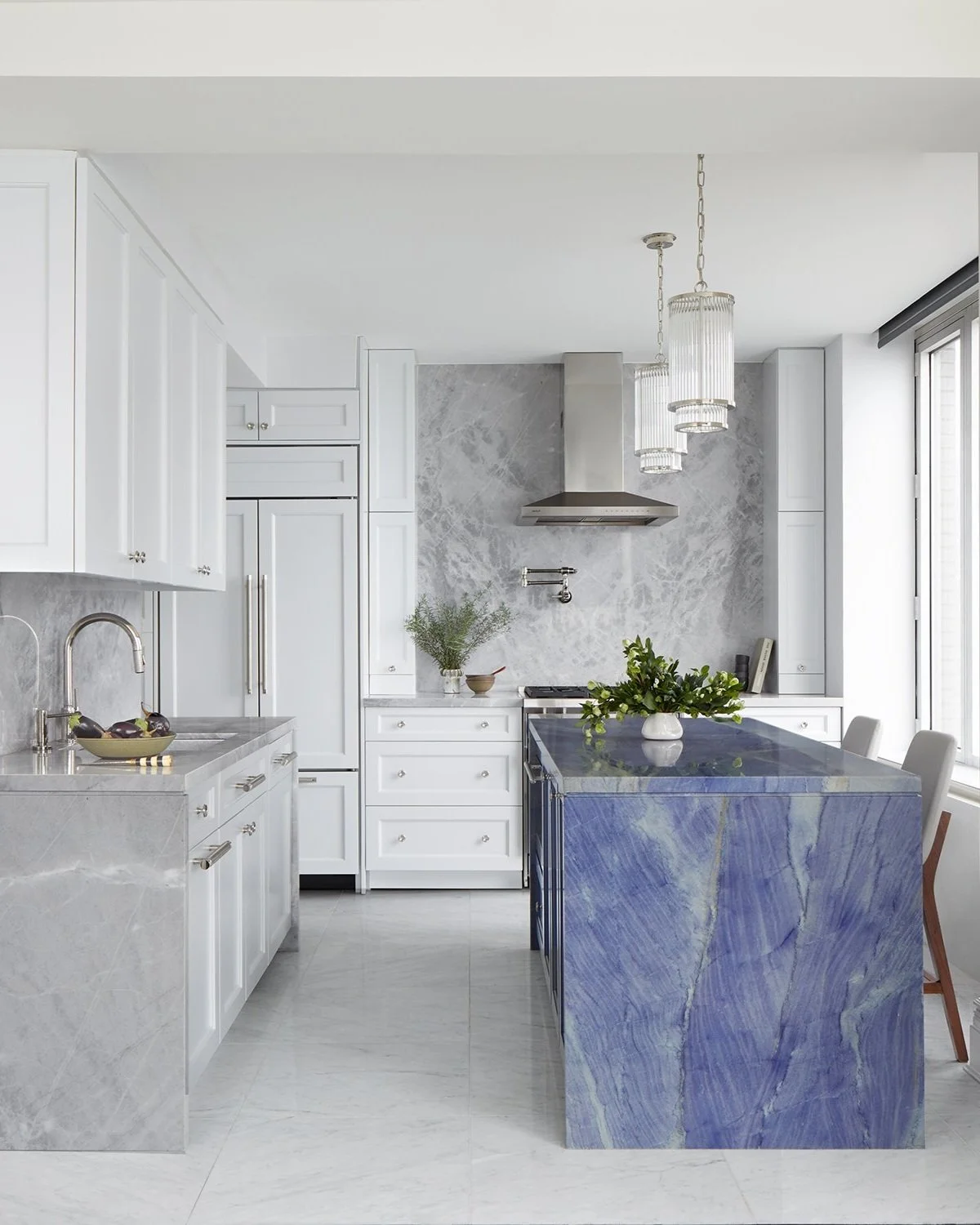
A classic kitchen design gets a statement island in the form of a blue quartzite sourced from Brazil.
Our Take: We love Rebecca’s point about function driving value. In smaller city homes, we often start with flow and storage before color or furniture. A well-organized kitchen or clever built-in feels instantly luxurious because it makes everyday life smoother. Buyers (and homeowners) can feel that difference.
Have you noticed any shifts in what high-end buyers are prioritizing lately—features, finishes, or even lifestyles they’re seeking?
Rebecca: “Definitely. There’s a strong shift toward a quieter kind of luxury—buyers are prioritizing calm, well-thought-out design over flash. Natural materials, organic textures, and serene palettes are more in demand than glossy finishes. Buyers want their homes to feel like a sanctuary.”

An understated and elegant powder room in our Scarsdale residence project.
Our Take: This is exactly the movement we’re seeing, too. The new luxury is understated and sensory—linen instead of lacquer, travertine instead of polished marble. Our clients are craving homes that restore them, not overwhelm them. Design that whispers sophistication rather than shouts it always endures.
What’s one design trend that feels worth the investment—and one that homeowners will regret chasing five years from now?
Rebecca: “Worth it: timeless materials like marble, solid wood, and unlacquered brass—they only get better with age and never feel dated.
Regret: overly specific ‘statement’ design like a bold patterned tile or trendy color that photographs well but dominates the space. Those choices tend to age quickly and limit broad appeal when it’s time to sell.”

A timeless color palette in our Scarsdale residence primary bath suite.
Our Take: We’re firmly in the “buy once, buy well” camp. Materials with patina and depth—stone, brass, natural wood—age beautifully. Trend-driven design might go viral, but it rarely feels personal. The best spaces have longevity because they evolve with you.
In your experience, what transforms a beautiful house into a home that truly sells itself?
Rebecca: “Emotion. The homes that sell themselves are the ones that make people feel something. It’s usually a mix of thoughtful design, warmth, and flow. The sense that someone loved living there. When design highlights how a home is lived in, not just decorated, buyers immediately start imagining their own lives there.”

A luxurious and moody whiskey library in our Scarsdale residence features a built-in bar out of walnut.
Our Take: We design for that exact feeling—the emotional resonance of a well-lived home. It’s not about perfection; it’s about soul. We obsess over flow, light, proportion, and comfort so that spaces feel effortlessly cohesive. When buyers (or guests) walk in and say, “I could live here,” that’s success.
Why Design Still Wins
Rebecca’s insights reinforce what we know to be true: design isn’t just decoration—it’s strategy, emotion, and value combined. A home that’s well-designed photographs beautifully, lives comfortably, and sells confidently.
Whether you’re planning to stay or preparing to sell, investing in timeless, thoughtful design always pays off—in dollars and in daily life.