The Classic Five: Why New York’s Pre-War Apartment Still Sets the Standard
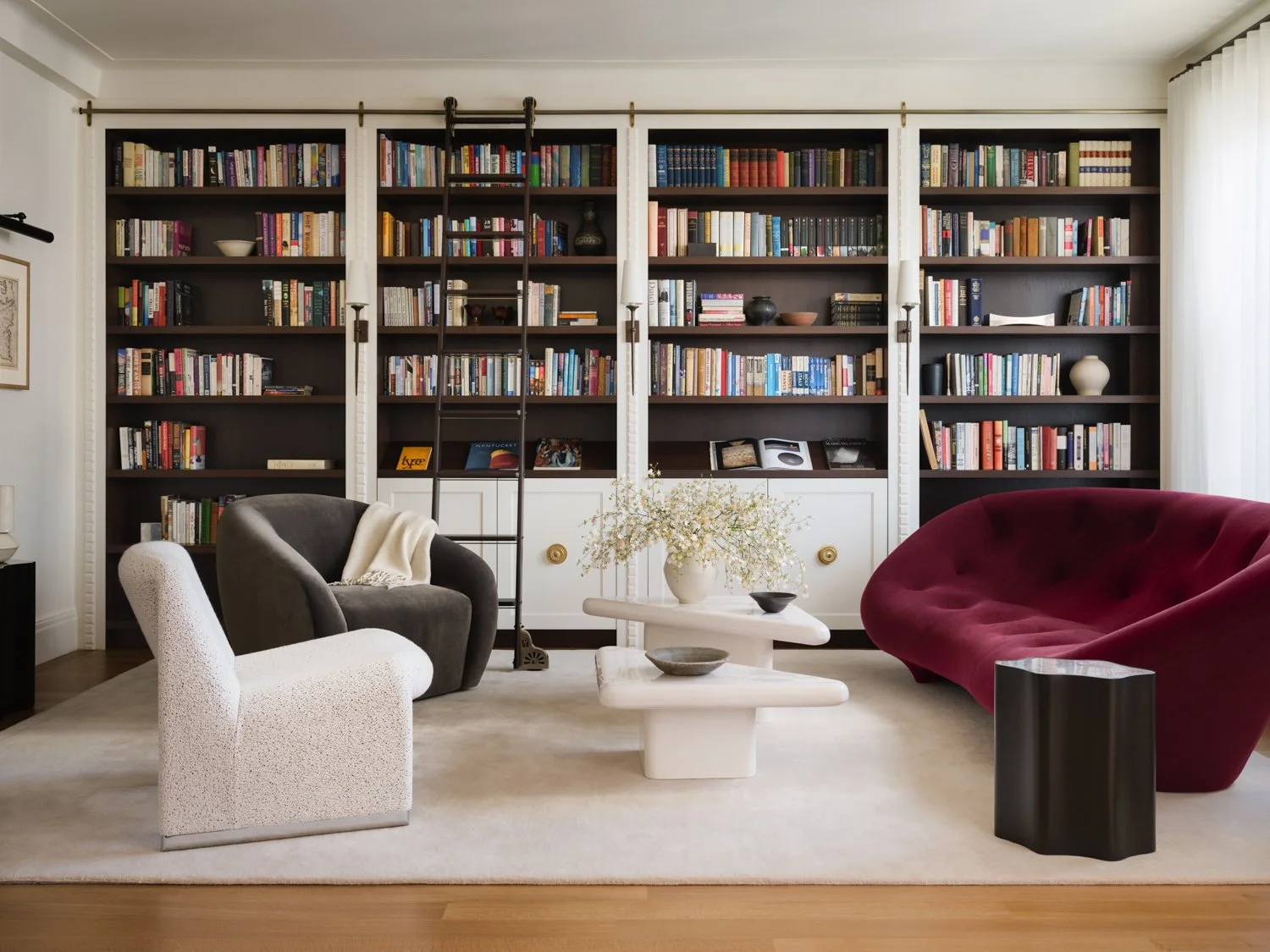
There’s a reason the “Classic Five” still defines aspirational apartment living in New York. For anyone considering a Classic Five apartment renovation in NYC, understanding how these homes were designed—and how to update them properly—is essential. Long before open plans and glass towers, these homes were designed with a level of proportion, privacy, and architectural clarity that still feels relevant—and increasingly rare.
For buyers on the Upper East Side and Upper West Side, understanding what a Classic Five really is—and what it takes to renovate one well—is the difference between preserving something exceptional and unintentionally erasing it.
What Is a Classic Five Apartment in NYC?
In New York, “Classic Five” does not just mean five rooms. It refers to a very specific pre-war planning logic: typically a living room, formal dining room, two bedrooms, and a kitchen. Unlike the more expansive “Classic Six,” the five omits a third bedroom but retains the same formal structure: a clear separation between public entertaining spaces and private living quarters.
This separation is not accidental—it reflects how these apartments were originally lived in.
A Classic Six usually adds a small staff room—historically called a maid’s room—and a Classic Seven apartment generally adds yet another room, often a library, staff room, or additional bedroom depending on the building and era.
These layouts are most closely associated with pre-war elevator buildings on the Upper East Side and Upper West Side, where formal entertaining, separation of public and private rooms, and service circulation were built into the plan itself. That structure still defines how these apartments feel today—but not necessarily how people live in them.
History of Prewar Apartments in NYC (Candela and Classic Five Layouts)
Most Classic Five apartments were built between the 1910s and early 1940s, during a period when New York’s affluent families were transitioning from townhouses to full-service apartment buildings.
Architects like Rosario Candela—along with firms such as J.E.R. Carpenter and Emery Roth—redefined apartment living at the highest level.
A few key things shaped these layouts:
-
Living and dining rooms were scaled for hosting, often with wood-burning fireplaces, high ceilings, and symmetrical proportions.
-
Kitchens were separated, sometimes tucked behind service corridors, with secondary entrances to maintain discretion.
-
Bedrooms were deliberately removed from entertaining spaces—something modern layouts often overlook.
Candela, in particular, became known for his ability to compress grandeur into efficient footprints. His plans feel effortless, but they are highly calculated—balancing light, circulation, and hierarchy in a way that still outperforms many contemporary layouts.
Good to Know:
That way of living emerged during a very specific moment in New York history. In the late 1910s through the 1930s, apartment living for affluent families became not only socially acceptable, but desirable. The city’s 1916 Zoning Resolution, the first comprehensive citywide zoning code in the United States, required buildings to step back as they rose, which helped shape the terraced, wedding-cake profiles that came to define so many of New York’s pre-war residential towers. The luxury apartment boom of the 1920s then transformed Park Avenue, Fifth Avenue, Sutton Place, Central Park West, and parts of the Upper West Side into the city’s canonical pre-war apartment neighborhoods.
No architect is more closely associated with this world than Rosario Candela. The Museum of the City of New York credits him with roughly 75 buildings and describes his work as central to the pre-war streetscapes of Park Avenue, Fifth Avenue, and Sutton Place. Candela was born in Sicily in 1890, immigrated to the United States, studied architecture at Columbia, and became famous in the 1920s and early 1930s for apartment plans that managed to feel both grand and efficient. His buildings—including 960 Fifth Avenue, 740 Park Avenue, and One Sutton Place South—remain among the most prized residential addresses in Manhattan.
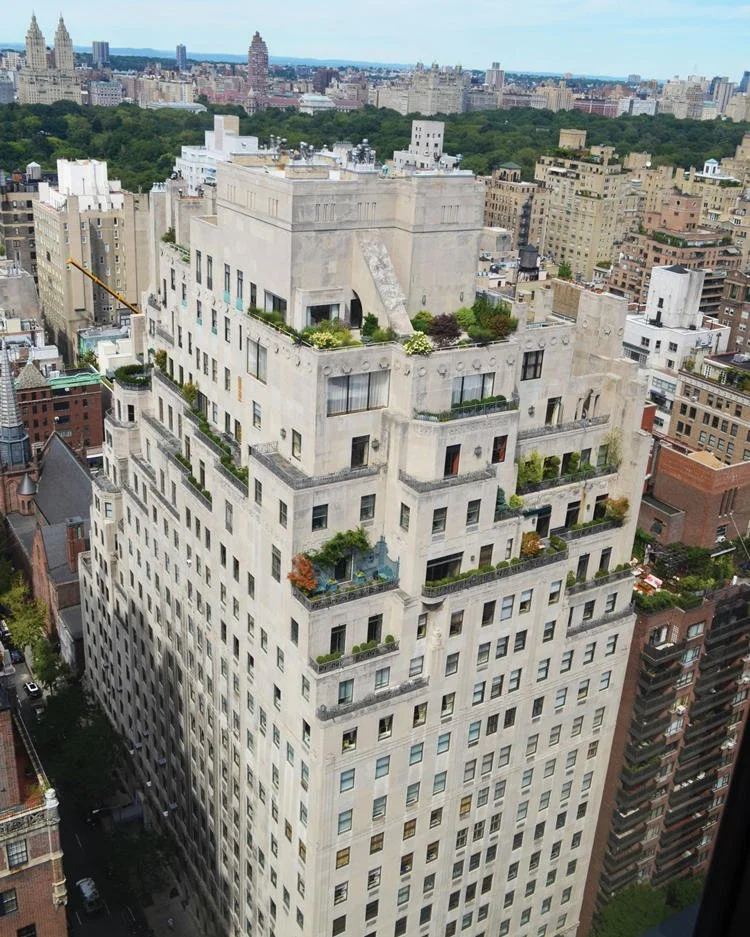
740 Park Avenue
Buildings like 740 Park Avenue and 960 Fifth Avenue—both associated with Candela—continue to set the benchmark for prewar apartment living in New York.
What makes Candela especially important is not just that he designed elegant buildings, but that he perfected a distinctly New York formula: understated but highly refined exteriors paired with remarkably sophisticated apartment plans. His buildings helped define the image of Upper East Side apartment living between the wars, while architects like J.E.R. Carpenter shaped Fifth Avenue’s grand apartment house tradition and Emery Roth gave Central Park West many of its most recognizable luxury silhouettes, including the San Remo and other major pre-war towers. On the Upper East Side, Candela’s name still carries unusual weight in real estate because his plans are so consistently admired for scale, circulation, and room hierarchy.
Why they are still so sought after.
Part of the reason these apartments are still so sought after is that they solve problems many newer apartments do not, which is why they remain in high demand for prewar apartment renovations in NYC. The room proportions are usually generous and balanced. Entertaining spaces are distinct from sleeping quarters. Windows are often taller, ceiling heights are more comfortable, and original details—plaster crown moldings, paneled doors, herringbone floors, deep baseboards, sometimes fireplaces—give the rooms a visual depth that is difficult and expensive to reproduce today. These apartments were also designed for a culture that valued privacy and sequence: you entered, you arrived, and then the apartment unfolded.
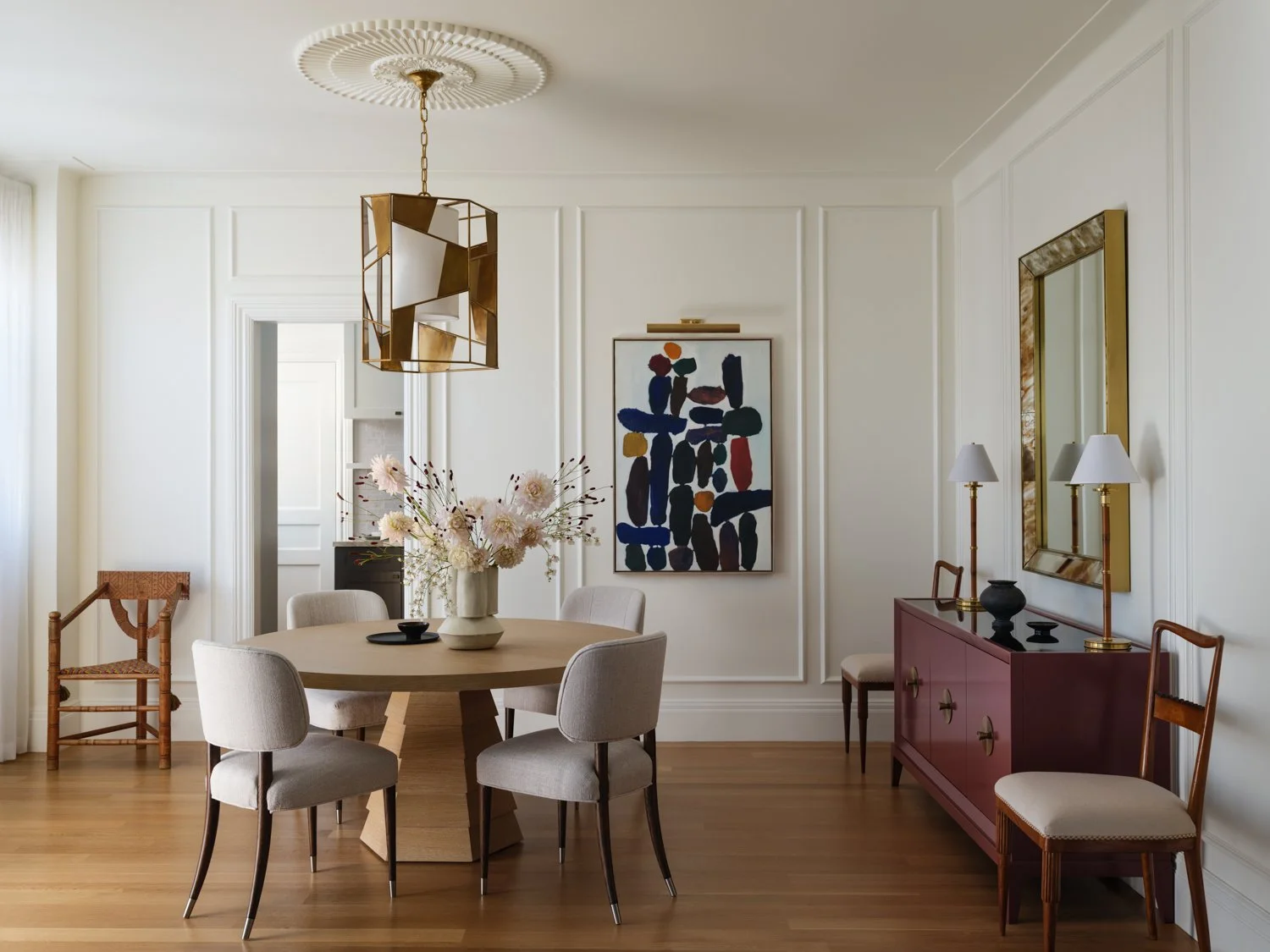
Dining room of a Classic Five apartment on the Upper West Side. Interior design by Libarikian Interiors. Photo by Joe Kramm.
Even as new development has evolved, Classic Five apartments continue to command attention—and premium pricing—for a few reasons:
1. Proportion over square footage
These rooms are not just large—they’re well-shaped. Ceiling heights, window placement, and wall lengths all work together, which makes furnishing them easier and more elegant.
2. Architectural detail you can’t replicate
Plaster moldings, solid wood doors, herringbone floors, and original fireplaces create a level of depth that’s expensive—and often impossible—to recreate authentically today. In these apartments, details like plaster moldings, custom millwork, and architectural hardware define the overall experience of the space.
3. Light and orientation
Many of these apartments were carefully positioned within buildings to maximize natural light and cross-ventilation—long before HVAC systems made that less critical.
4. A sense of permanence
There’s an emotional quality to these spaces. They feel established, grounded, and considered—qualities that resonate even more in contrast to newer, more transient-feeling construction.
What Clients Actually Want Today (And Where It Gets Tricky)
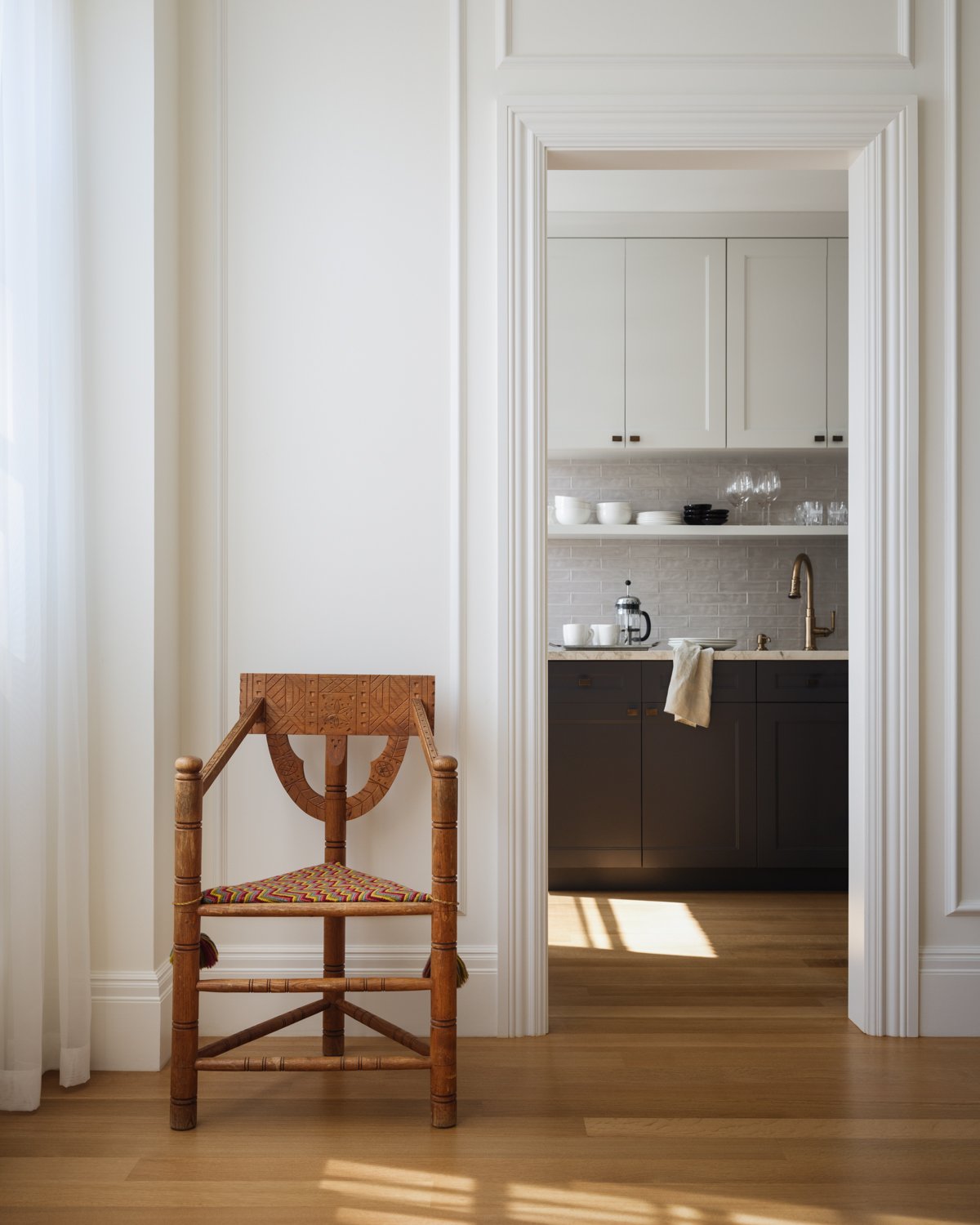
The biggest shift isn’t architectural—it’s behavioral. Today’s clients don’t need staff circulation. They need:
A place to take a quiet call, away from kids
A kitchen that functions for real daily use
A dining space that feels relaxed, not ceremonial
A washer/dryer hook up in either the kitchen or a closet
In many Classic Fives:
The formal dining room becomes the actual everyday table
The kitchen remains a narrow galley with limited counter space
The “extra room” that once housed staff no longer exists
Which creates a real challenge: you’re asking a very structured layout to accommodate a much more fluid lifestyle.
We’ve opened kitchens when possible—but expanding them is often constrained by structure and cost. Walls in these buildings are rarely simple to move, and even small changes can have outsized implications.
What to Know Before Renovating a Classic Five Apartment in NYC
This is where things get complicated—and where most projects either succeed quietly or become far more difficult (and expensive) than expected. Renovating a Classic Five is rarely straightforward, and this is where buyers are often surprised. The first misconception is that because the apartment is old, it must also be flexible. In practice, many pre-war buildings are anything but flexible. Structural walls, legacy plumbing stacks, old joist conditions, and co-op rules can sharply limit what is actually possible. A plan that seems simple on paper—move a kitchen, widen an opening, create a new bathroom connection—can become expensive, slow, or completely unworkable once the building’s structure and governing documents enter the picture.
1. You’re Designing Around Structure, Not Just Space
Pre-war buildings often have:
Structural masonry walls (not easily moved)
Irregular joist spacing
Limited tolerance for new openings
What this means:
That “simple” plan to open the kitchen or combine rooms can quickly run into structural or co-op board restrictions.
Smart approach:
Work with the existing layout first. The best renovations feel like refinements—not reinventions.
2. Plumbing and Wet-Over-Dry Rules Are Real Constraints
Most co-op buildings strictly regulate where kitchens and bathrooms can be relocated. “Wet-over-dry” rules typically prevent plumbing from being placed above living spaces below.
What this means:
Moving a kitchen across the apartment—or even reconfiguring a bathroom significantly—may not be approved.
Smart approach:
Reimagine the kitchen within its existing footprint, or expand it into adjacent service spaces rather than primary rooms.
3. Electrical Capacity Is Often Outdated
Many pre-war apartments were not designed for modern electrical loads.
Limited panel capacity
Minimal outlet distribution
No allowance for high-end appliances, AV systems, or layered lighting
What this means:
A full electrical upgrade is often necessary—not optional.
Smart approach:
Plan lighting, AV, and power holistically from the beginning. Retrofitting later is disruptive and inefficient.
4. Floors, Walls, and Ceilings Are Rarely Level
Part of the charm—and the challenge.
Floors may slope
Walls may be out of plumb
Ceilings can vary subtly across rooms
What this means:
Millwork, cabinetry, and stone installations require precise field measurements and custom adjustments.
Smart approach:
Budget for true customization. Standard solutions rarely fit correctly without compromising quality.
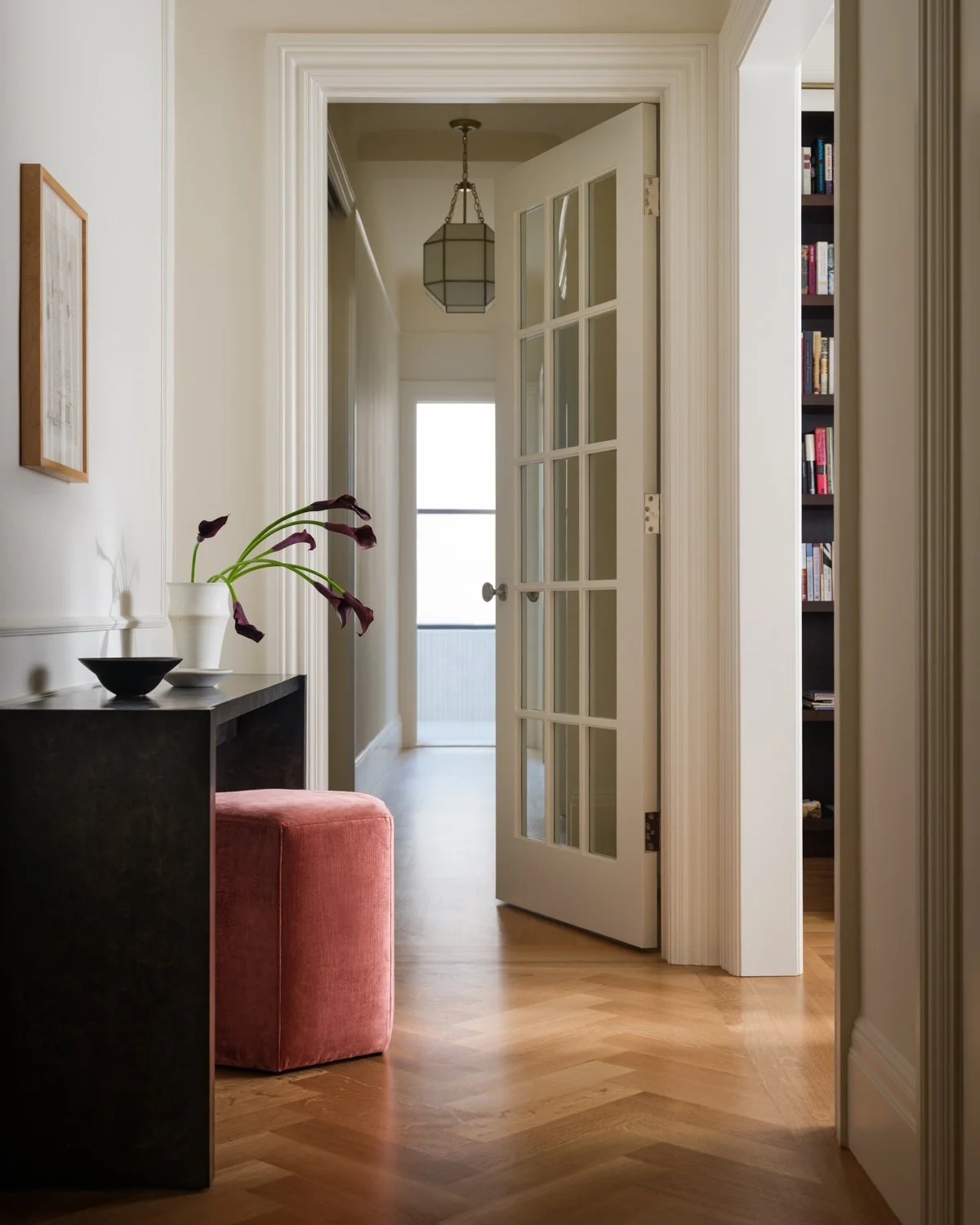
Floors are not level. And sometimes, they can’t be.
In one project, the slope was so pronounced you could roll a ball from one end of the apartment to the other. Fully leveling the floors would have raised the entry floor above the front door threshold—an unacceptable condition.
The solution:
We reduced the slope to a gentle transition rather than forcing perfection. The apartment feels correct, even if it isn’t mathematically flat.
5. Preserving Character Takes Restraint
The biggest mistake in renovating a Classic Five is over-correcting—flattening the architecture in pursuit of something “cleaner” or more modern.
What this means:
You lose the very thing that makes the apartment valuable.
Smart approach:
Edit, don’t erase.
Restore original moldings where possible
Match profiles when replacing trim
Integrate modern elements quietly (flush outlets, concealed storage, discreet lighting)
NYC Co-op Renovation Rules: Alteration Agreements Explained
A second misconception is that “gut renovation” means unlimited freedom. In New York co-ops and many condos, renovation work is governed not only by city permits, but by the building’s alteration agreement. The New York City Bar’s model alteration agreement makes clear that these agreements exist to protect the cooperative corporation, the apartment owner undertaking the work, and neighboring residents. In practice, alteration agreements typically regulate what work is allowed, when work can occur, which contractors and insurance are acceptable, how common areas must be protected, what deposits or fees are required, and what professional review the board may demand before approval.
That board review matters more than many people expect. In many co-ops, the board’s architect or engineer reviews the proposed scope before work begins, and the building may require revisions before issuing approval. Separately, New York City’s Department of Buildings requires permit filings for most construction work, and licensed architects or engineers generally need to file plans and pull permits before work can legally begin. Cosmetic work may be simpler, but once you are altering layouts, plumbing, electrical systems, or partitions, you are usually well beyond “just decorating.”
How Long Does a Classic Five Renovation Take in NYC?
This is also why renovation timelines in these apartments are so often misunderstood. There is no universal rule, but multiple New York renovation firms and architects advise budgeting roughly 6 to 16 weeks for approvals alone in many co-op scenarios, especially when alteration agreement review, board schedules, architect comments, and permit filings are involved. Full apartment renovations in Manhattan are commonly described as taking around 5 to 6 months at the lean end, and often 6 to 12 months overall once planning, approvals, and construction are combined. More complex projects—especially landmarked apartments, full-gut renovations, or those with heavy custom work—can take longer.
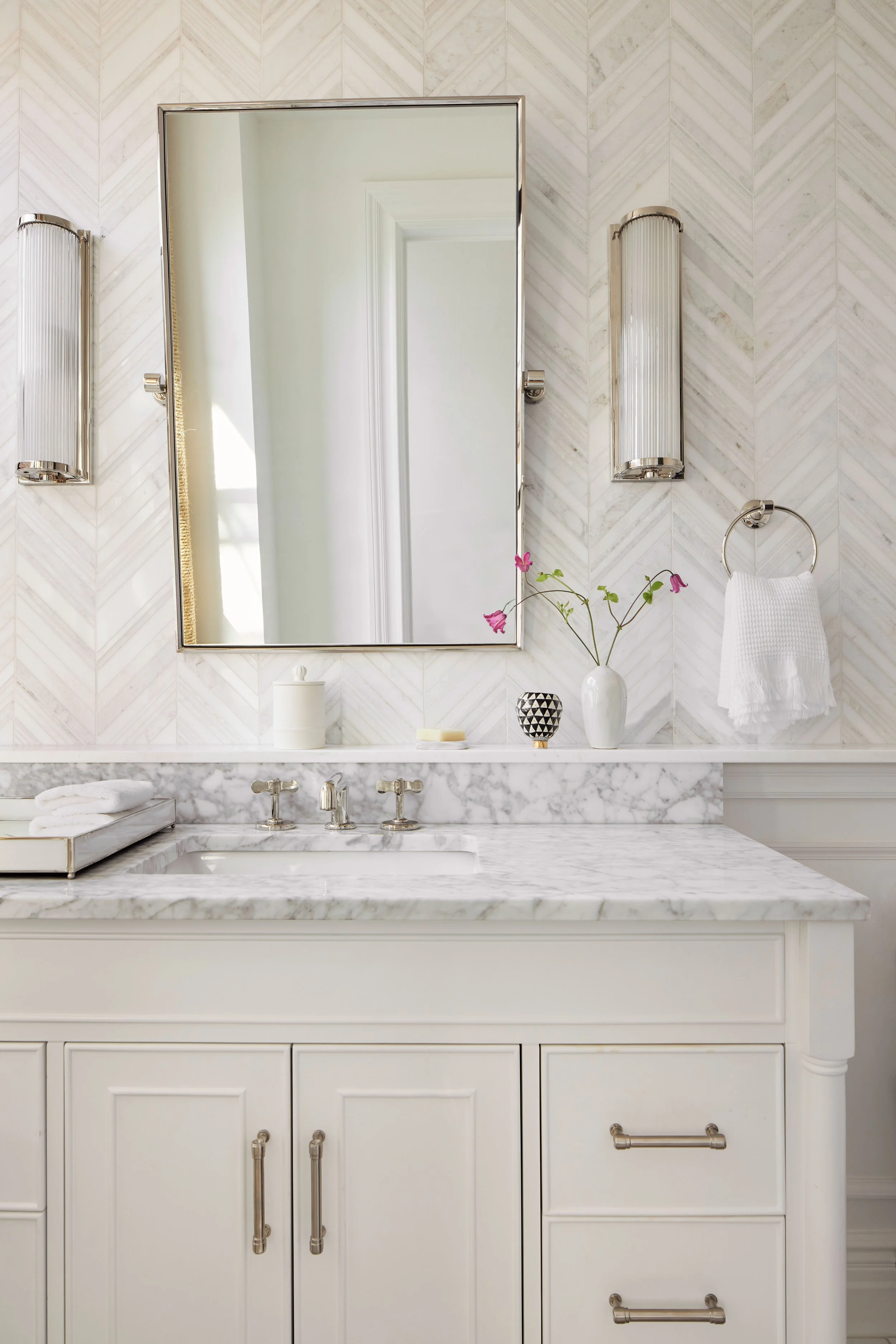
Pre-war Bathrooms
Primary bathrooms in pre-war apartments may not have the largest footprint, but they offer a great opportunity to use beautiful materials to enhance the elegance.
Another New York-specific issue is “wet over dry.” Boards and building professionals are often wary of placing bathrooms or kitchens over rooms below that are not already wet areas, because of leak risk and the complications that follow. That is one reason bathroom enlargements and relocated kitchens can be so contentious. People often assume the most luxurious move is to create a much larger bath or add plumbing wherever it suits the plan, but in these buildings that is frequently where ambition collides with regulation.
How Much Does It Cost to Renovate a Classic Five in NYC?
Renovating a Classic Five apartment in New York is less about a fixed number and more about scope, building conditions, and level of finish.
Pre-war renovations tend to be more complex than new construction due to structural constraints, co-op regulations, and the level of craftsmanship required. Custom millwork, plasterwork, and material quality often drive investment more than square footage alone.
Navigating co-op approvals, structural constraints, and detailing at this level typically requires a coordinated approach between architect and designer—something we handle through our full-service interior architecture and design work.
Working with a New York Luxury Interior Designer on a Classic Five
Renovating a Classic Five apartment in New York is rarely a straightforward design exercise. It requires coordination between architects, contractors, expeditors, and co-op boards—along with a clear design vision that respects the architecture while adapting it for modern living.
For many of our clients, the value of working with a luxury interior designer in NYC is not just aesthetic—it’s strategic. From navigating alteration agreements to anticipating structural constraints and refining every detail of the finished space, the process is as important as the result.
The goal is not simply to update the apartment, but to create a home that feels effortless, cohesive, and deeply considered.
What People Think They Want (But Often Regret)
The deeper design lesson is that great Classic Five renovations usually come from working with the apartment’s logic, not against it. Today’s clients often want something these layouts were never originally designed to provide: a private place to take a quiet call away from children, a less formal dining room that functions as an everyday kitchen table, and a kitchen that does more than support staff service.
Because many original kitchens are narrow galleys with limited counters, the dining room often ends up carrying much more daily life than it once did. Opening a kitchen can help, but expanding it is not always realistic because moving walls in these apartments can be structurally difficult, expensive, or both.
There are a few consistent patterns:
“We want a much larger bathroom.”
Expanding bathrooms is one of the hardest—and most restricted—moves in these buildings. Plumbing locations and co-op rules limit what’s possible.
“We need a tub.”
In reality, many clients rarely use one. Prioritizing a well-designed shower often leads to a better daily experience.
“Let’s add built-ins everywhere.”
Storage is important—but too many built-ins can make these apartments feel smaller and more rigid, working against their natural proportions.
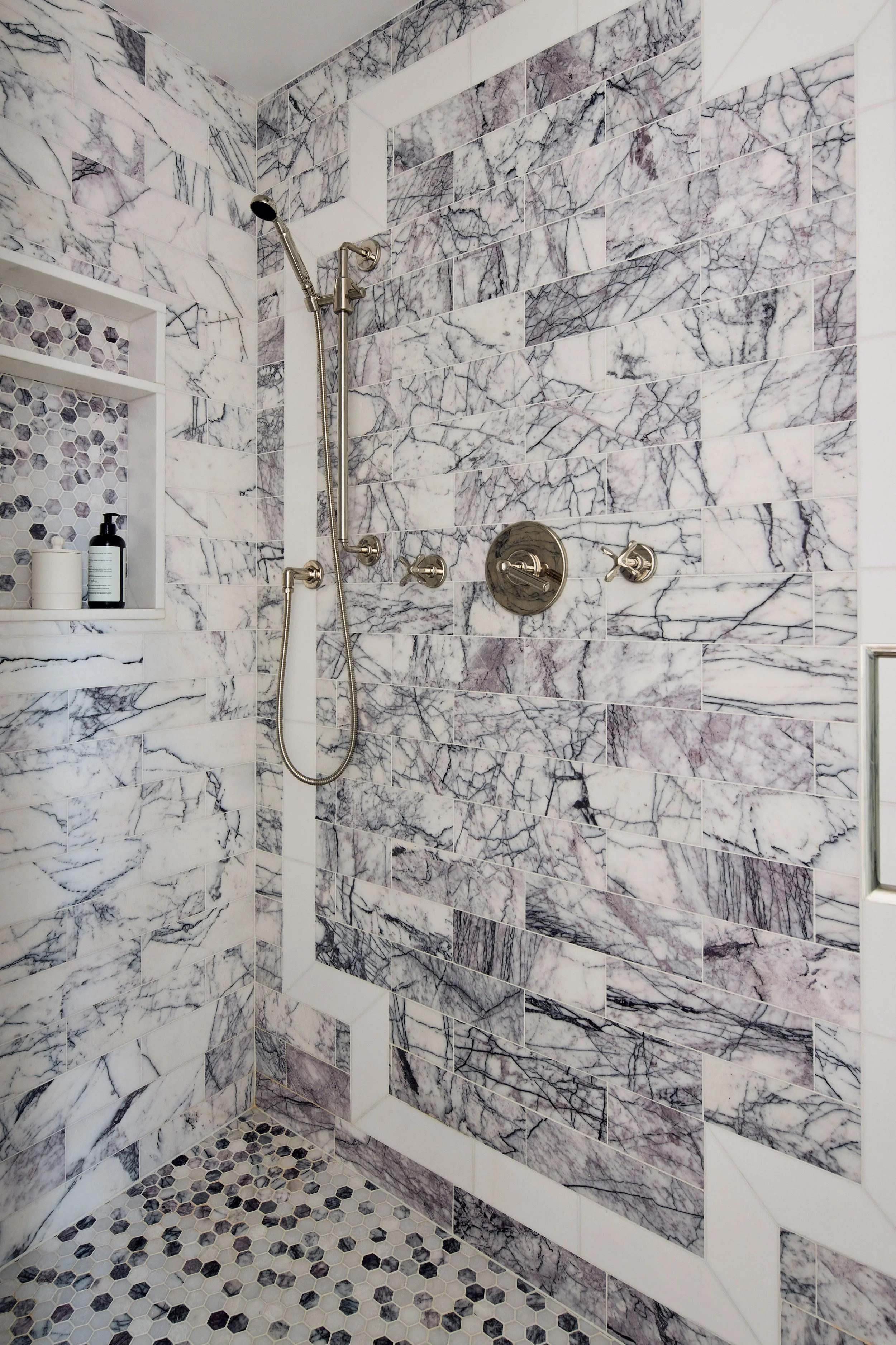
The Case for a Standout Shower
Even though this primary bath did not have room for a tub - we designed a beautiful walk-in shower using lilac marble with a Thassos marble border, to create a wow-factor in the bath.
Where Thoughtful Design Makes the Difference
The most successful Classic Five renovations -particularly at the high end- don’t try to compete with the architecture—they collaborate with it. That is why the most successful renovations often invest less in dramatic re-planning and more in craftsmanship. Many of our clients come to us after purchasing prewar apartments on the Upper East or Upper West Side, looking to modernize them without losing their architectural integrity.
In these apartments, luxury is read through the quality of what touches the hand and frames the eye: floors, doors, hardware, moldings, plaster crowns, trim profiles, millwork fit, and material honesty. Restoring moldings—or replacing them properly when they are beyond saving—matters. Using plaster crown instead of cheaper substitutes matters. Choosing real stone or other high-quality materials instead of lower-grade imitations matters. In a Classic Five, people feel quality immediately, even if they cannot name exactly why.
A well-designed project will:
Clarify circulation without disrupting hierarchy
Introduce modern function without visual noise
Balance open moments with intimate ones
Make new work feel as though it has always belonged
This is where experience matters—not just in design, but in navigating co-op boards, coordinating with architects and contractors, and anticipating constraints before they become problems.
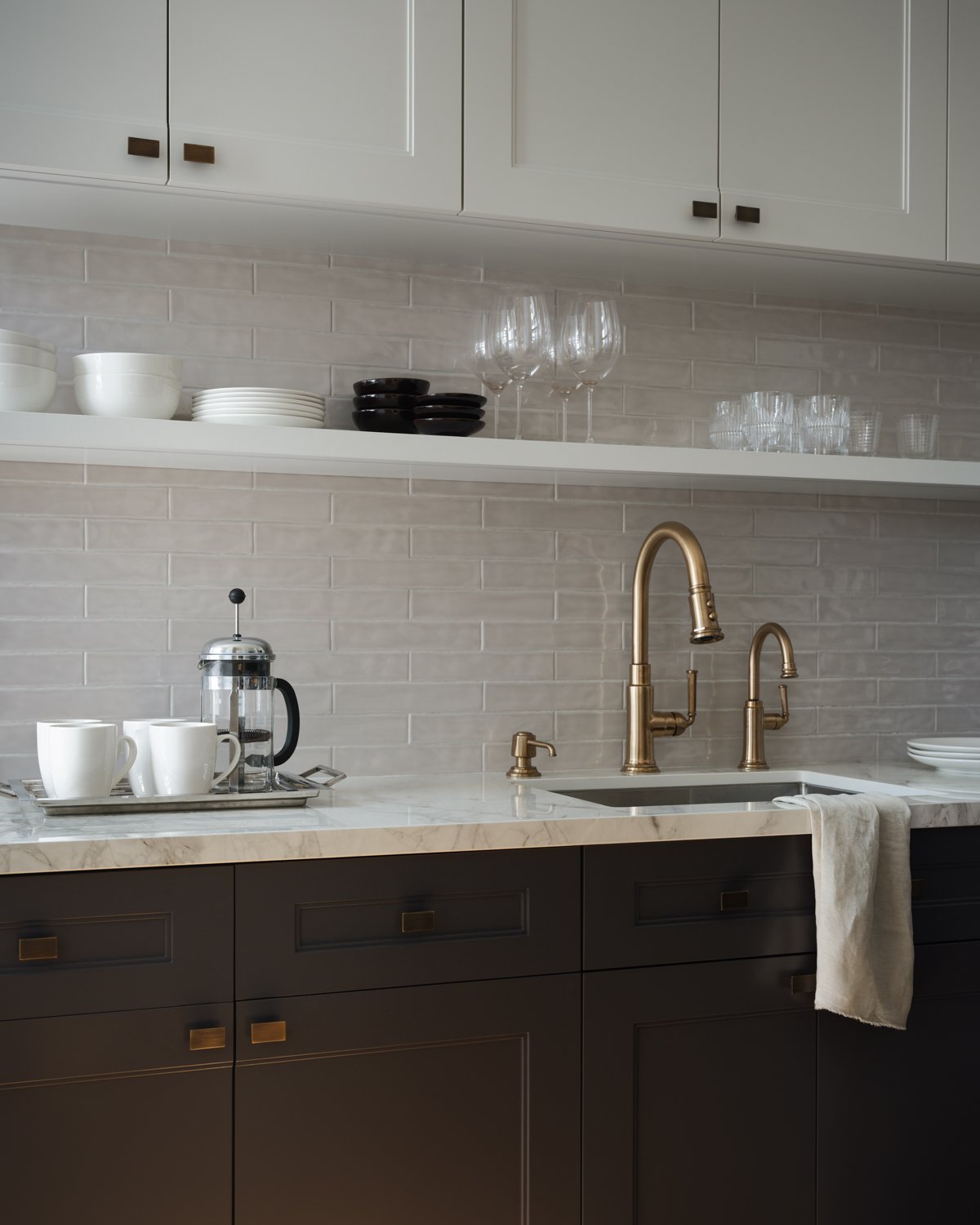
What We Always Prioritize (No Exceptions)
There are certain things we don’t compromise on:
Restoring or thoughtfully replacing original moldings
Using plaster crown—not lightweight substitutes
Investing in real materials (not porcelain trying to look like stone)
Elevating doors, hardware, and floor finishes
A Classic Five is not just a floor plan; it is a piece of New York domestic history. It comes out of a very specific culture of urban living, a very specific period of apartment-house design, and a very specific set of architectural achievements by figures like Candela, Carpenter, and Roth. Renovating one well requires more than taste. It requires historical respect, technical discipline, patience with process, and a willingness to solve for reality rather than fantasy. When that happens, the result feels unmistakably New York: graceful, intelligent, and built to last.
If you’re considering renovating a Classic Five apartment in New York, the most important decisions happen long before construction begins. A thoughtful, well-executed design process ensures the apartment not only looks beautiful—but functions effortlessly within the realities of the building. For projects of this scale, working with an experienced NYC luxury interior designer can make all the difference.
Frequently Asked Questions
-
A Classic Five is a prewar apartment layout with a living room, dining room, two bedrooms, and a kitchen, designed with clear separation between public and private spaces.
-
Sometimes—but it depends on structural walls, plumbing locations, and co-op board approval.
-
An alteration agreement is a document required by co-op and condo boards outlining the rules, approvals, and requirements for renovation work.
-
Most projects take 9–12 months including approvals and construction.