Iconic Interiors: How Timeless Homes Are Designed (and Why They Never Go Out of Style)

Austin residence designed by Kelly Wearstler.
Some interiors stay with you long after you’ve seen them. You may not remember every detail, but you remember how the space felt—calm, confident, unmistakably intentional. These are iconic interiors: homes that don’t rely on trends, yet never feel dated.
In our work as a luxury interior design studio, we often talk about this idea with clients—how to create a home that feels effortless, personal, and enduring. Iconic interiors aren’t about copying a look or following design rules. They’re about developing a point of view and executing it with restraint.
Here’s what actually makes an interior iconic—and how timeless homes are designed behind the scenes.
Iconic Interiors Start with a Clear Design Point of View
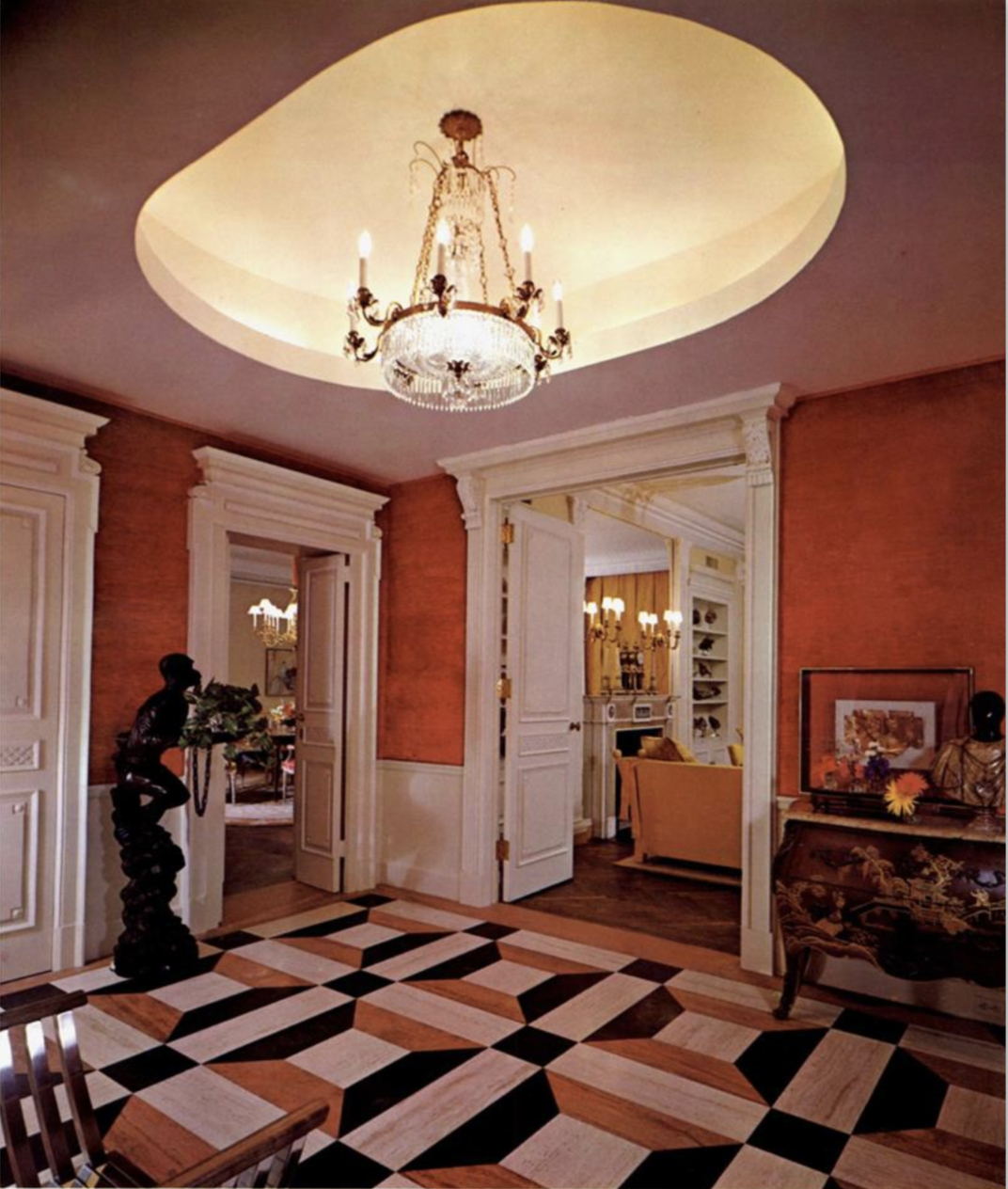
The entry of this apartment entry on Fifth Avenue, designed by Jospeh Braswell, sets the tone for the entire home. The drama is in the eye-catching floor pattern made of red Persian travertine, black Belgian marble, and beige Italian travertine, as seen in Architectural Digest 1970.
The most timeless interiors don’t try to do everything at once. They’re guided by a strong, cohesive perspective that informs every decision—from layout to materials to art placement.
This doesn’t mean committing to a single style or era. Instead, it means understanding what belongs in the space—and what doesn’t. In high-end residential design, clarity is what allows a home to feel layered without feeling busy.
When a home has a clear design point of view, it feels confident. Nothing is shouting for attention. Everything feels intentional.

A bedroom in a classic Manhattan apartment, designed by Atelier AM, features oak paneling by Feu Boiseries, featured in Architectural Digest.

A walnut whiskey library designed by Libarikian Interiors, as seen in Luxe.
Design insight:
Before adding more, define what the room is about.
If you can’t describe it simply, the design isn’t finished yet.
Iconic Interiors Follow a Point of View
Identify your “no” list. Write down three things you will not do in your home (e.g., boucle overload, brass everywhere, open shelving). Consistency starts with restraint.
Repeat one finish throughout the home. Choose a metal, wood tone, or stone and use it in at least three rooms to create continuity.
Effortless Interior Design Is the Result of Editing, Not Excess
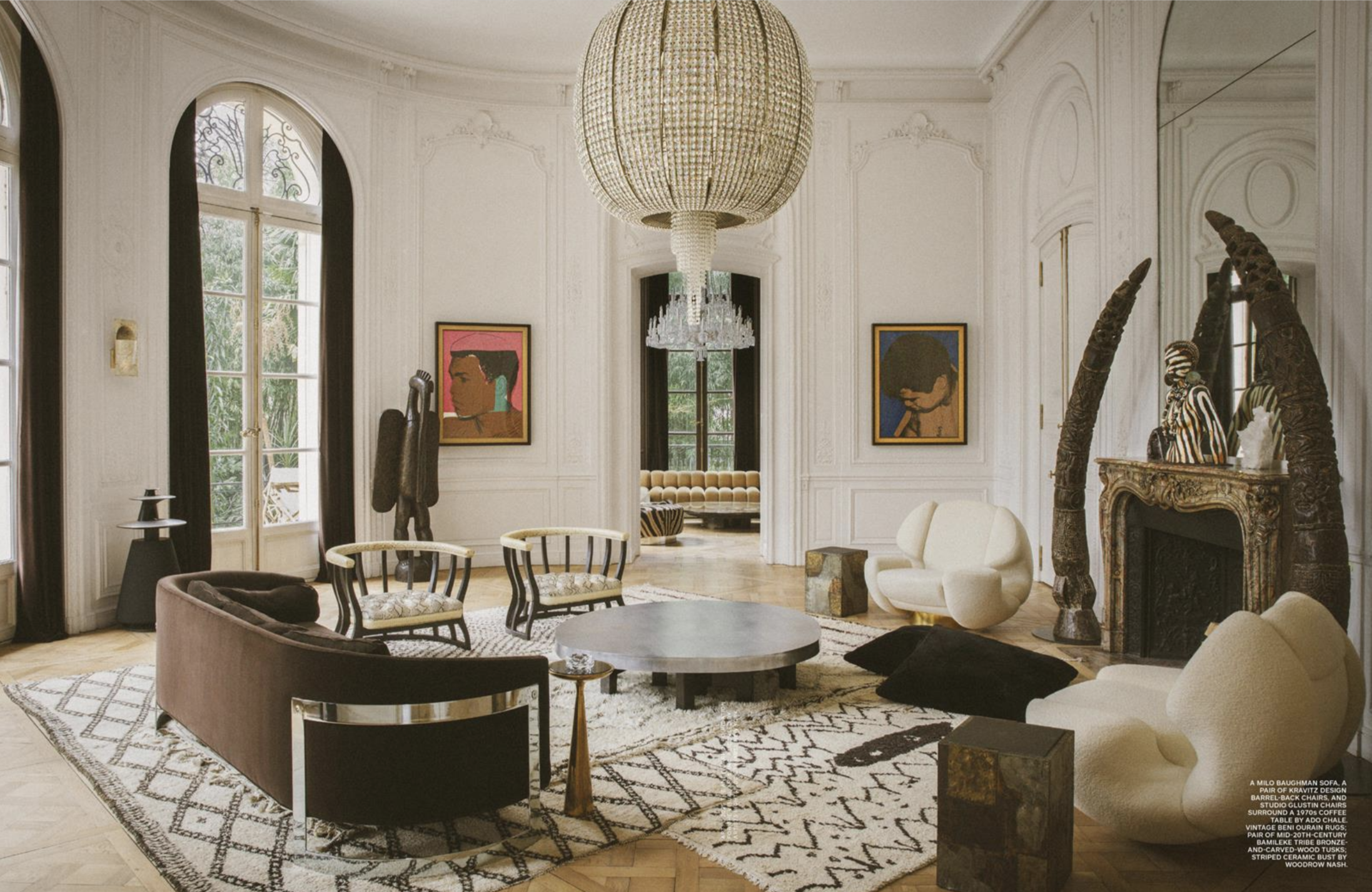
The living room of Lenny Kravitz’s home in Paris, as seen in Architectural Digest.
One of the most misunderstood ideas in luxury interior design is “effortless.” Effortless interiors are rarely casual or accidental—they are the result of careful editing.
Iconic homes feel calm because someone made deliberate decisions about scale, spacing, and restraint. There’s room for materials to breathe. Objects are allowed to stand on their own without competing.
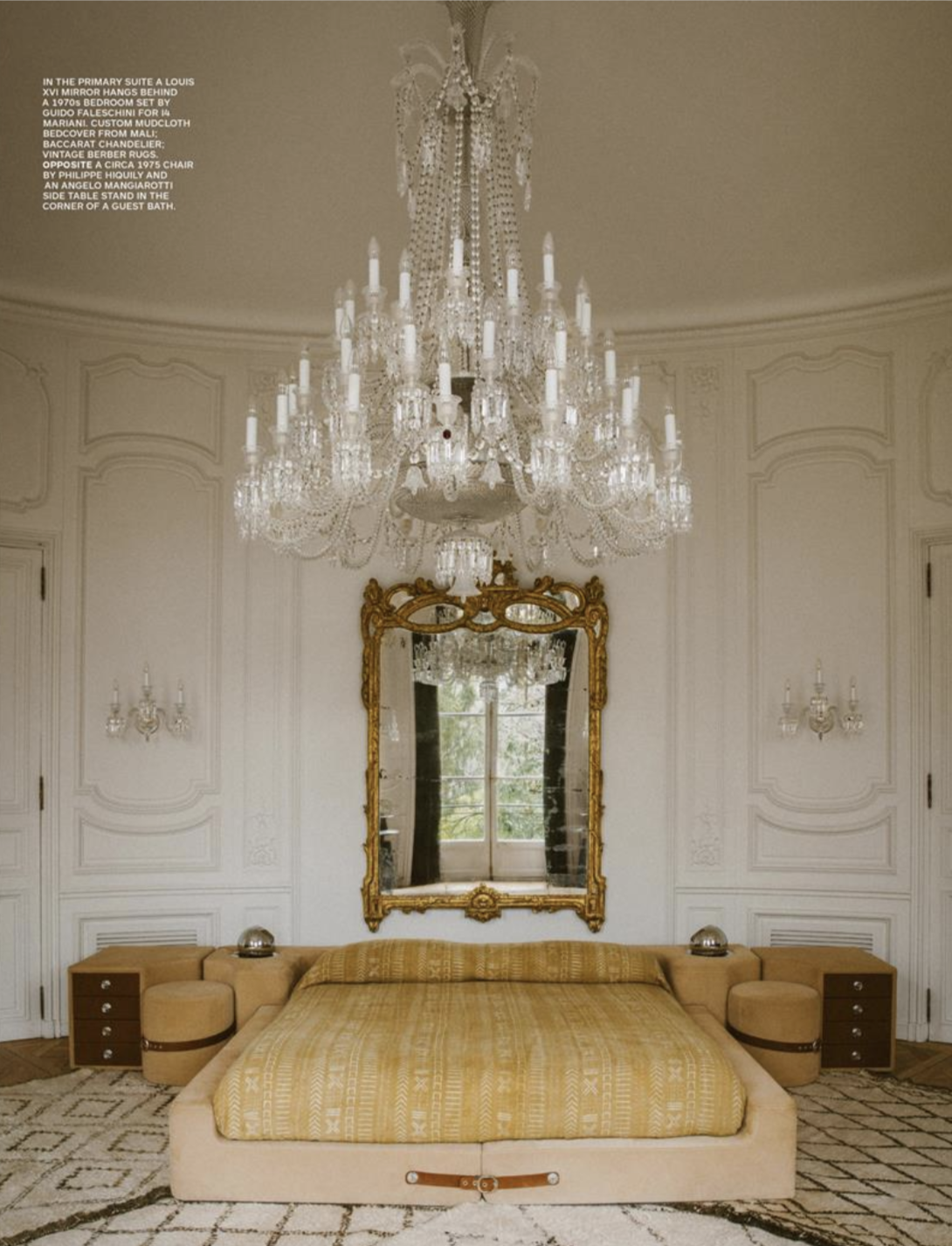
The primary bedroom designed by Lenny Kravitz, as seen in Architectural Digest.
This is why timeless interiors age so well. They aren’t overloaded with trend-specific elements that date quickly.
Design insight:
If a space feels visually loud, the solution is often subtraction—not another layer.
What Makes an Interior Truly Iconic?
Remove one “filler” piece from every main room. If an item doesn’t add function or emotion, take it out. Iconic rooms are edited, not accumulated.
Choose one anchor piece and let it lead. This could be a sofa, artwork, dining table, or even a fireplace. Everything else should support it—not compete.
Create negative space on purpose. Leave at least one wall, corner, or surface intentionally sparse. Iconic interiors allow the eye to rest.
Timeless Interiors Rely on Materials, Not Trends
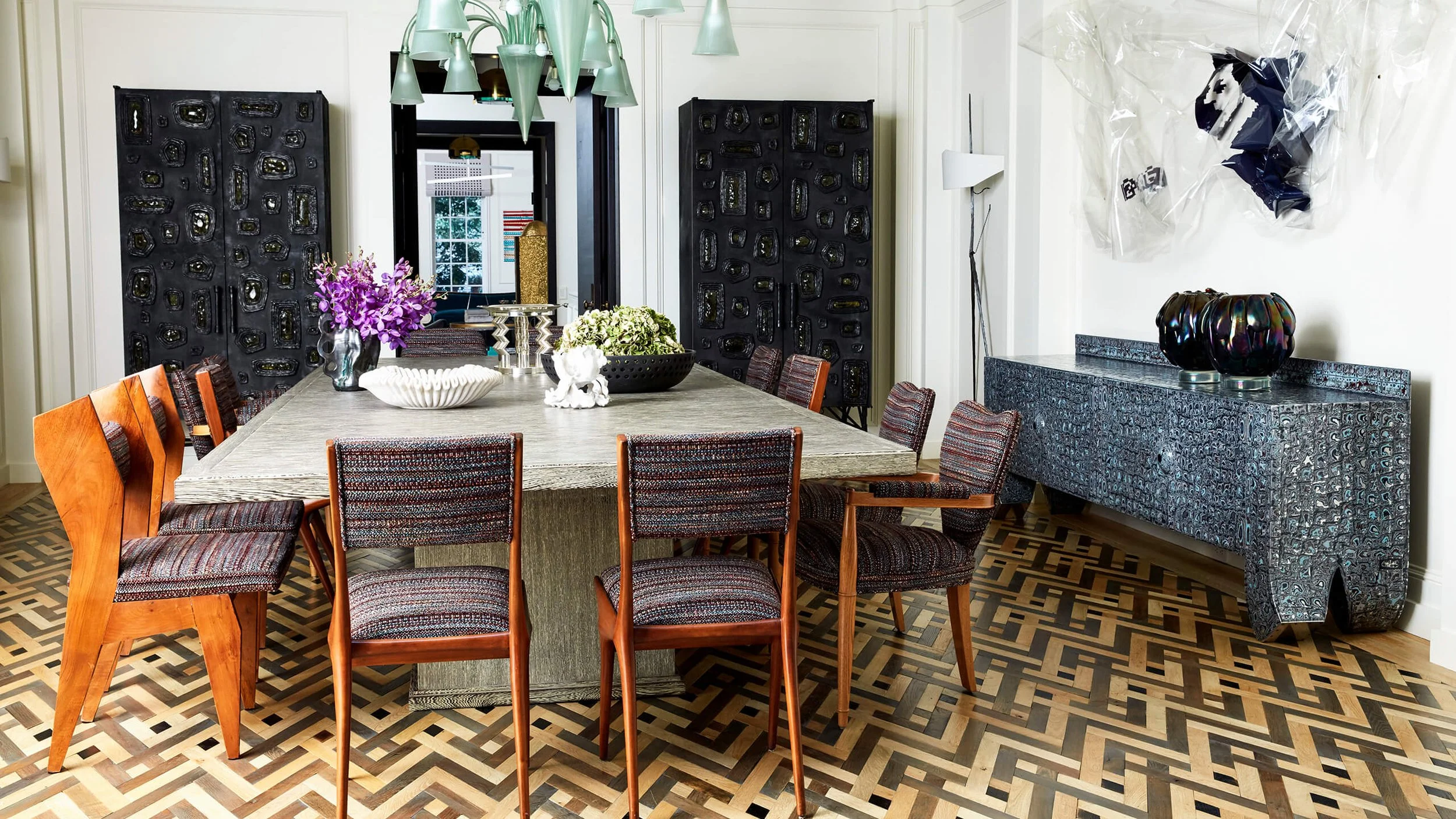
Manhattan townhouse dining room designed by Kelly Wearstler.
In iconic interior design, materials do most of the work. Plaster walls, natural stone, wood with visible grain, soft linens—these elements add depth without decoration.
Rather than relying on bold finishes or fast trends, timeless homes use a restrained palette of high-quality materials chosen for how they age and respond to light. Texture replaces pattern. Patina replaces novelty.
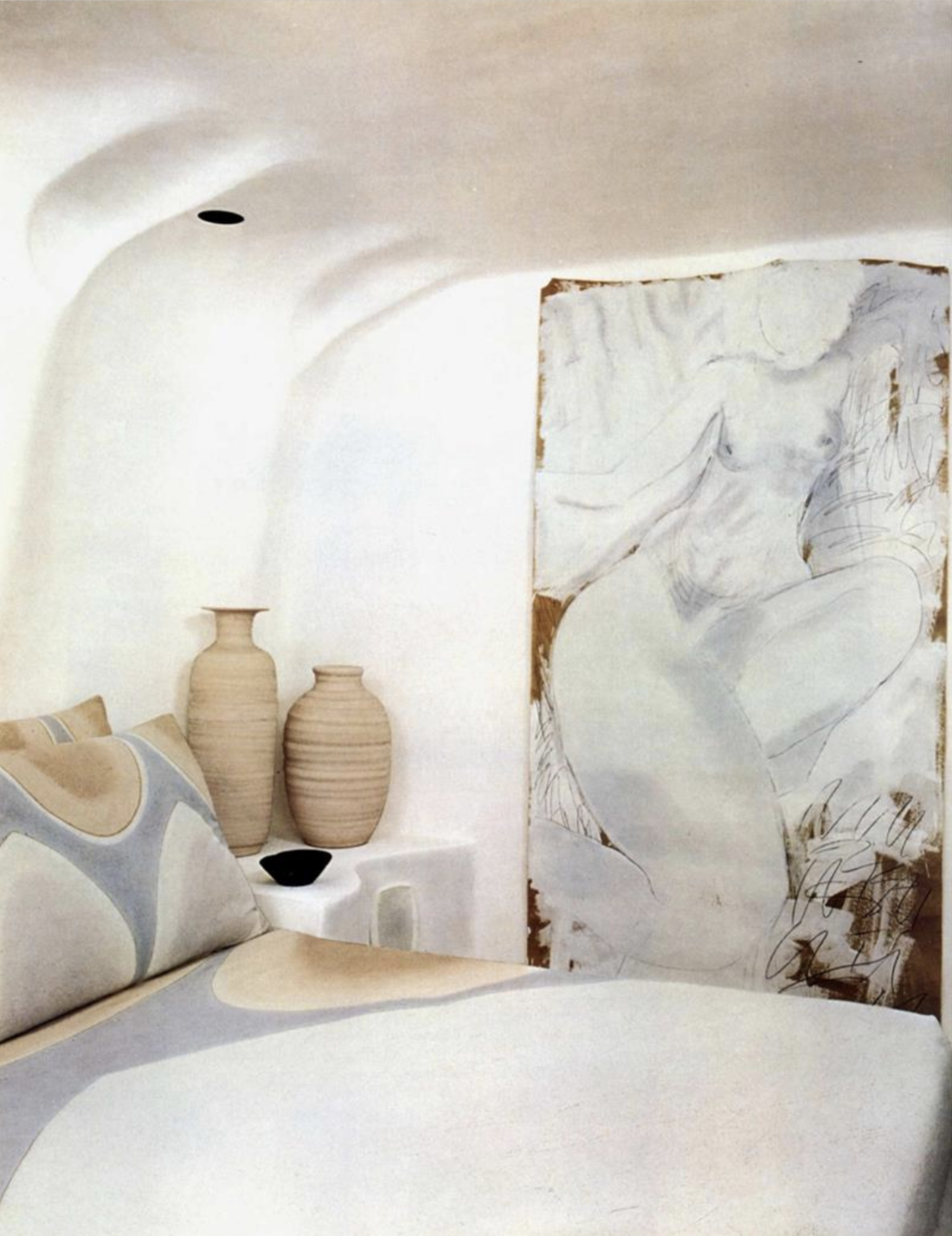
A Florida bedroom designed by Robert Hutchinson is remarkable for it’s coved ceiling and hand-painted bedding. As seen in Architectural Digest in 1979.
This approach is especially important in luxury homes in New York and the Hamptons, where longevity and craftsmanship matter.
Design insight:
Choose fewer materials, but choose them well. Quality always outlasts trends.
Material Choices That Age Gracefully
Replace one synthetic item with a natural one. Swap a polyester pillow for linen, a resin tray for stone, or a lacquered box for wood.
Introduce patina on purpose. Add something that already has wear—vintage brass, antique wood, or hand-thrown ceramic—so the room doesn’t feel “newly finished.”
Limit your palette to three core materials per room. For example: oak, linen, bronze. Anything beyond that should be an accent, not a foundation.
Furniture That Feels Anchored to the Architecture
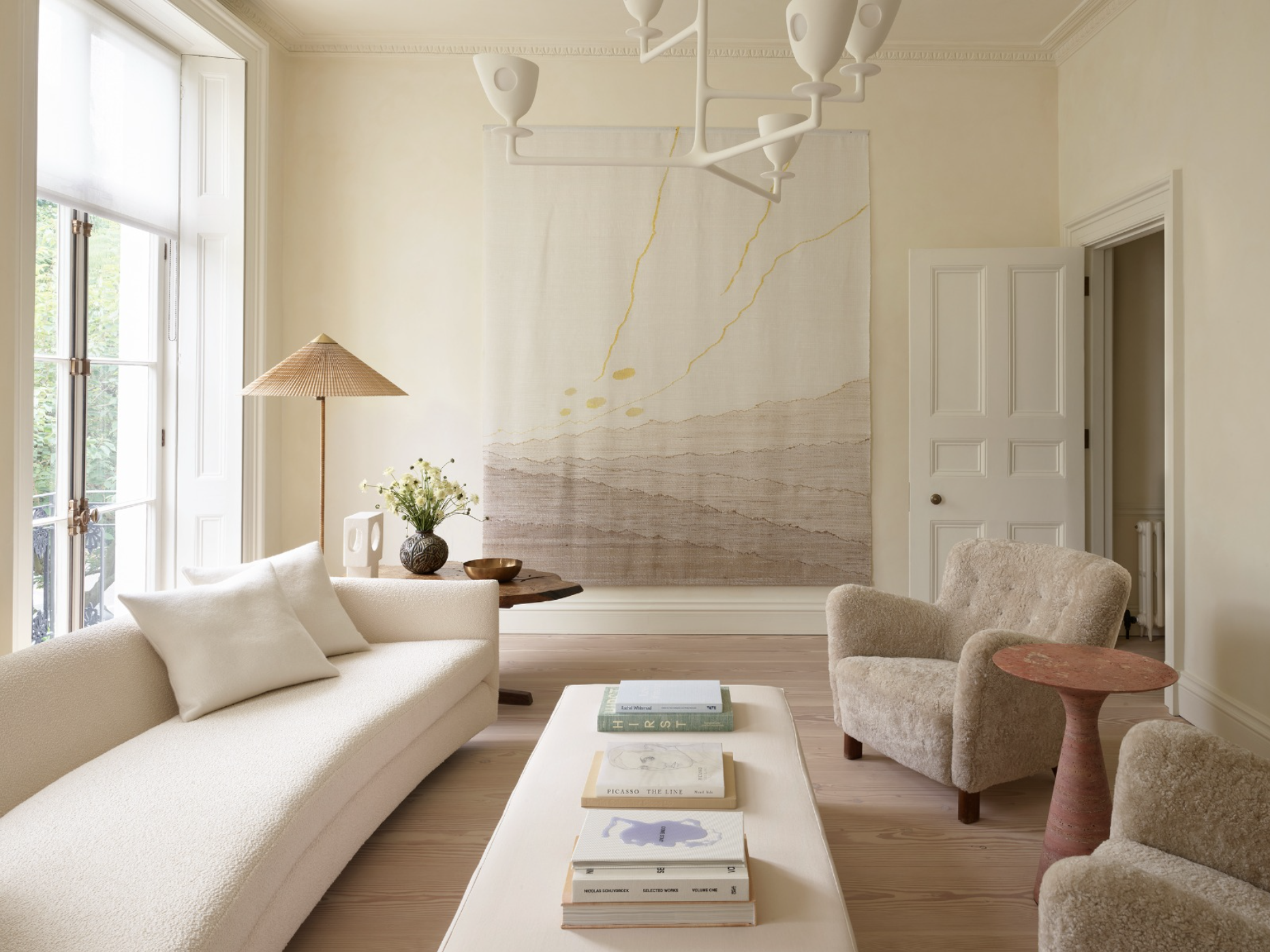
London townhouse designed by Rose Uniacke.
In truly iconic interiors, furniture doesn’t feel placed—it feels grounded. Pieces relate to the scale of the room and the architecture itself, rather than floating independently.
Oversized seating, generous proportions, and relaxed upholstery often play a role here. The goal isn’t perfection; it’s belonging.

Manhattan townhouse living room designed by Fraçois Catroux for Crown Princesse Marie-Chantal of Greece, as seen in Architectural Digest.
This is one of the reasons iconic homes feel lived-in, not staged—even when they’re meticulously designed.
Design insight:
If a piece feels too small or overly delicate, it likely doesn’t belong in the space long-term.
Iconic Homes Embrace Imperfection

Interior design by Libarikian Interiors.
Perfection dates a home faster than imperfection ever will. Iconic interiors allow for irregularities: a wall with texture, furniture with wear, art that doesn’t “match” the room.
These elements introduce humanity into the design. They signal confidence—and a willingness to live with the space rather than preserve it.
In luxury interior design, restraint and imperfection often read as more sophisticated than polish.
Design insight:
If everything looks brand new, the room may feel finished—but not alive.
Why Iconic Interior Design Endures
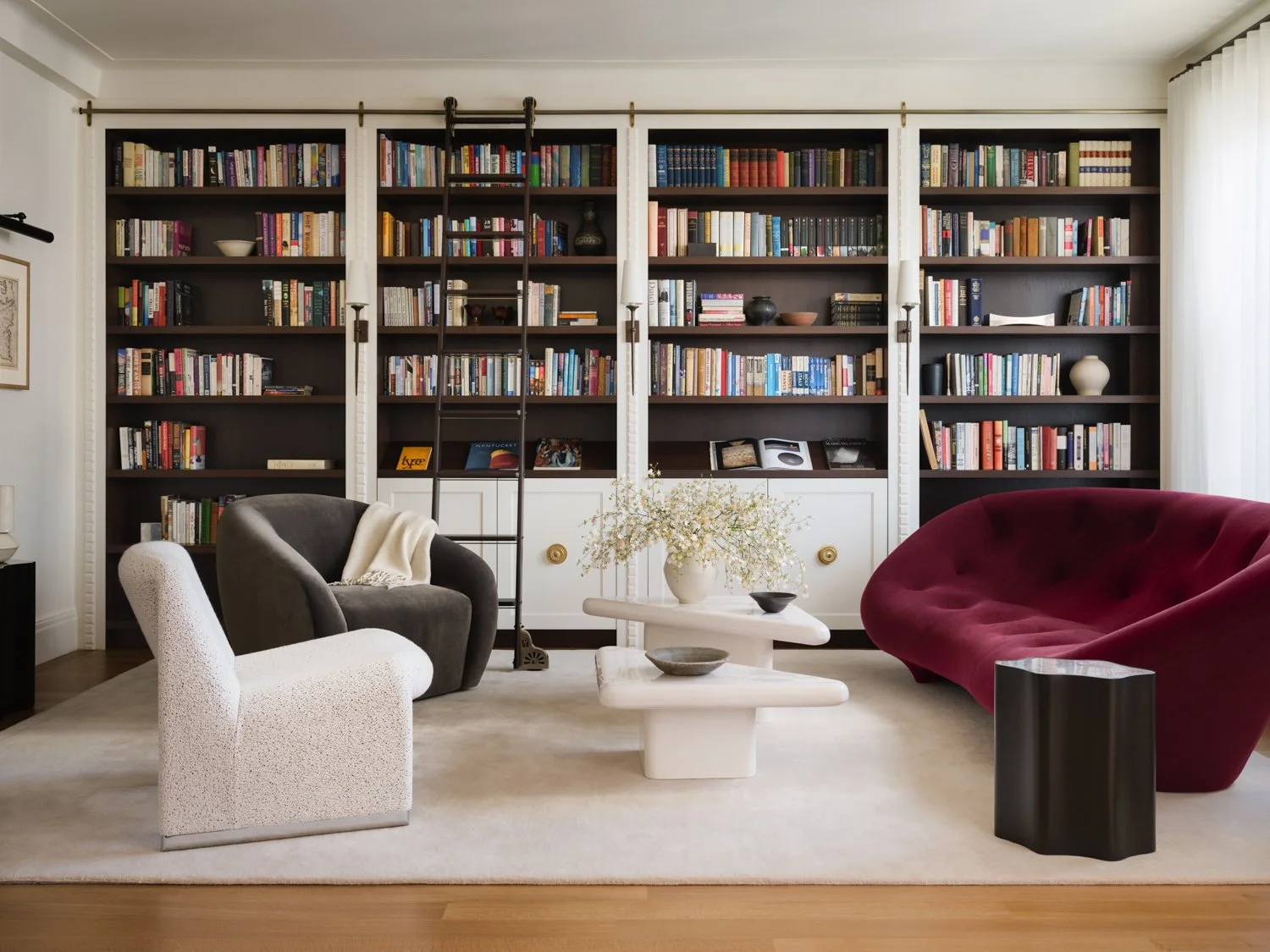
Living room of a pre-war apartment on the upper west side designed by Libarikian Interiors.
What defines an iconic interior isn’t a specific look—it’s confidence. Timeless homes trust proportion, materials, and editing. They don’t chase validation through trends or excess.
Instead, they evolve slowly. They feel personal. And they remain relevant long after design moments pass. The most enduring interiors don’t try to say everything. They simply say something clearly—and beautifully.
If you’re in the middle of shaping a home—or thinking about what you want it to become—we’re always happy to talk through ideas. Sometimes clarity comes from a conversation.