There is a version of buying a Hamptons house that sounds very glamorous.
You close on a beautiful home, drive east on Friday afternoon, open the door, pour yourself a drink, and immediately begin your summer.
And then there is the version where the dining table is still in a warehouse in New Jersey, three outdoor chairs are backordered, the Wi-Fi doesn't reach the pool house, and no one remembered to buy coffee mugs.
Not quite the same fantasy.
For many of our clients buying second or third homes in Southampton, Sagaponack, Water Mill, or East Hampton, the real luxury is not simply having a beautiful house.
It is arriving and having the house completely ready. Furniture installed. Beds made. Towels in the bathrooms. Glasses in the bar. Outdoor cushions out. Pool house stocked. Shades programmed. Wine chilled.
You put down your bag and live. That is what turnkey Hamptons interior design means to us.
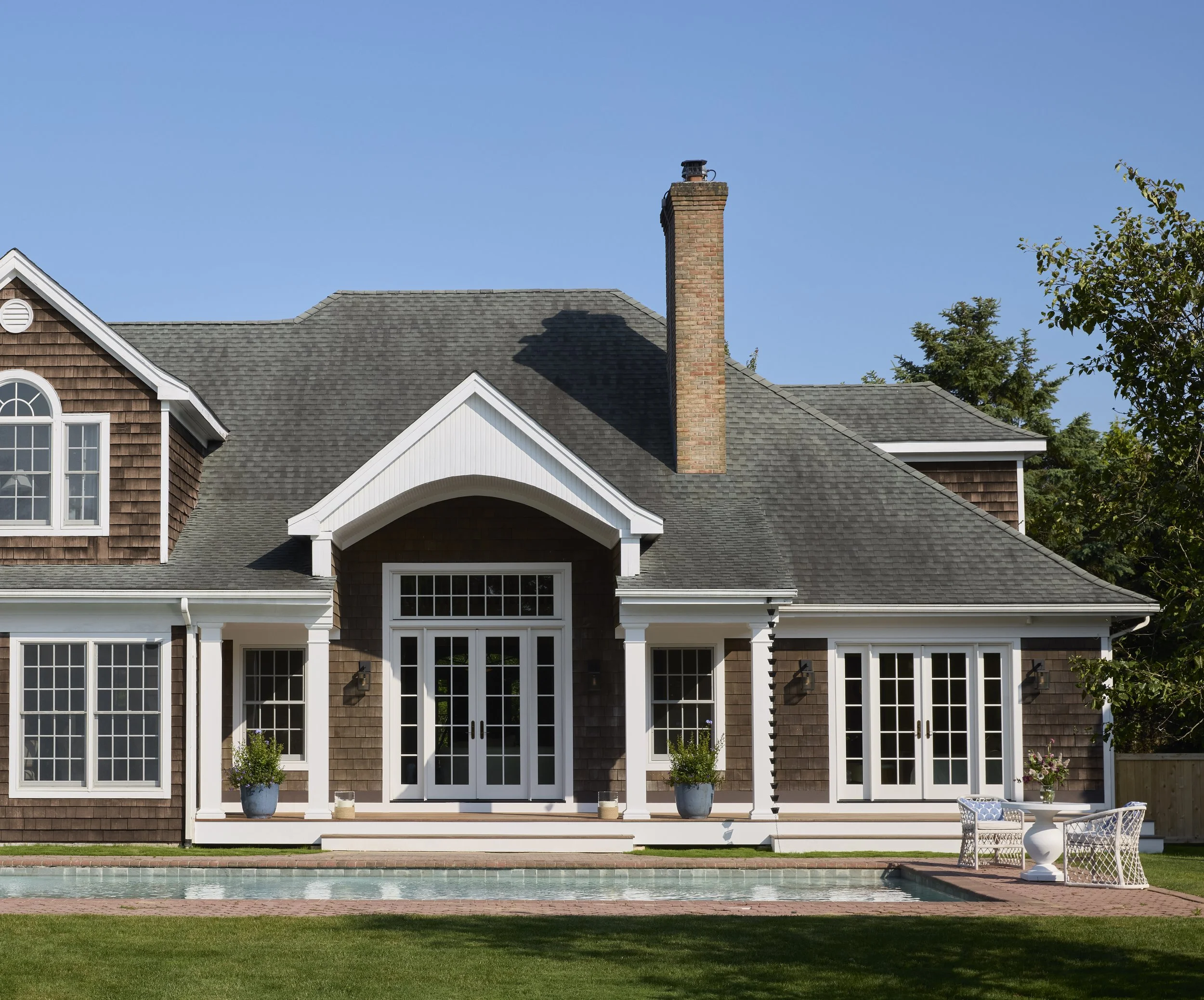
A Hamptons House Takes a Small Village
Completing a large East End residence involves far more people than most homeowners ever see.
There may be custom millworkers, landscape architects, builders, lighting specialists, home-automation teams, art installers, conservators, upholsterers, window-treatment installers, AV specialists, outdoor-furniture vendors, receiving warehouses, and quite possibly someone whose entire job is making sure one extremely complicated piece of stone arrives intact.
Our job as a full-service Hamptons interior design firm is to coordinate all of them.
And ideally, we start doing that months before the house is finished.
We build the procurement schedule, coordinate trades, track custom furnishings, plan installation, and make sure all of these separate moving parts arrive at the same finish line.
For clients with family offices or household staff, we may work directly with estate managers, personal assistants, family office directors, attorneys, and property managers rather than asking the principal to get involved in every decision.
Because no one bought a house in Sagaponack because they wanted to spend Tuesday afternoon chasing a missing lampshade. That is our job.
“Move-In Ready” Means Much More Than Furniture
This is where people are often surprised. A truly turnkey Hamptons home doesn't stop with sofas, beds, and dining chairs. Think about everything you use during the first 24 hours in a house:
Sheets.
Towels.
Wine glasses.
Coffee.
Serving pieces.
Pool towels.
Hangers.
Soap.
Outdoor cushions.
Espresso cups.
A bottle opener.
All of it has to come from somewhere. For turnkey projects, that may mean overseeing the full OS&E—Operating Supplies & Equipment—package so the home is actually ready to function when the family arrives.
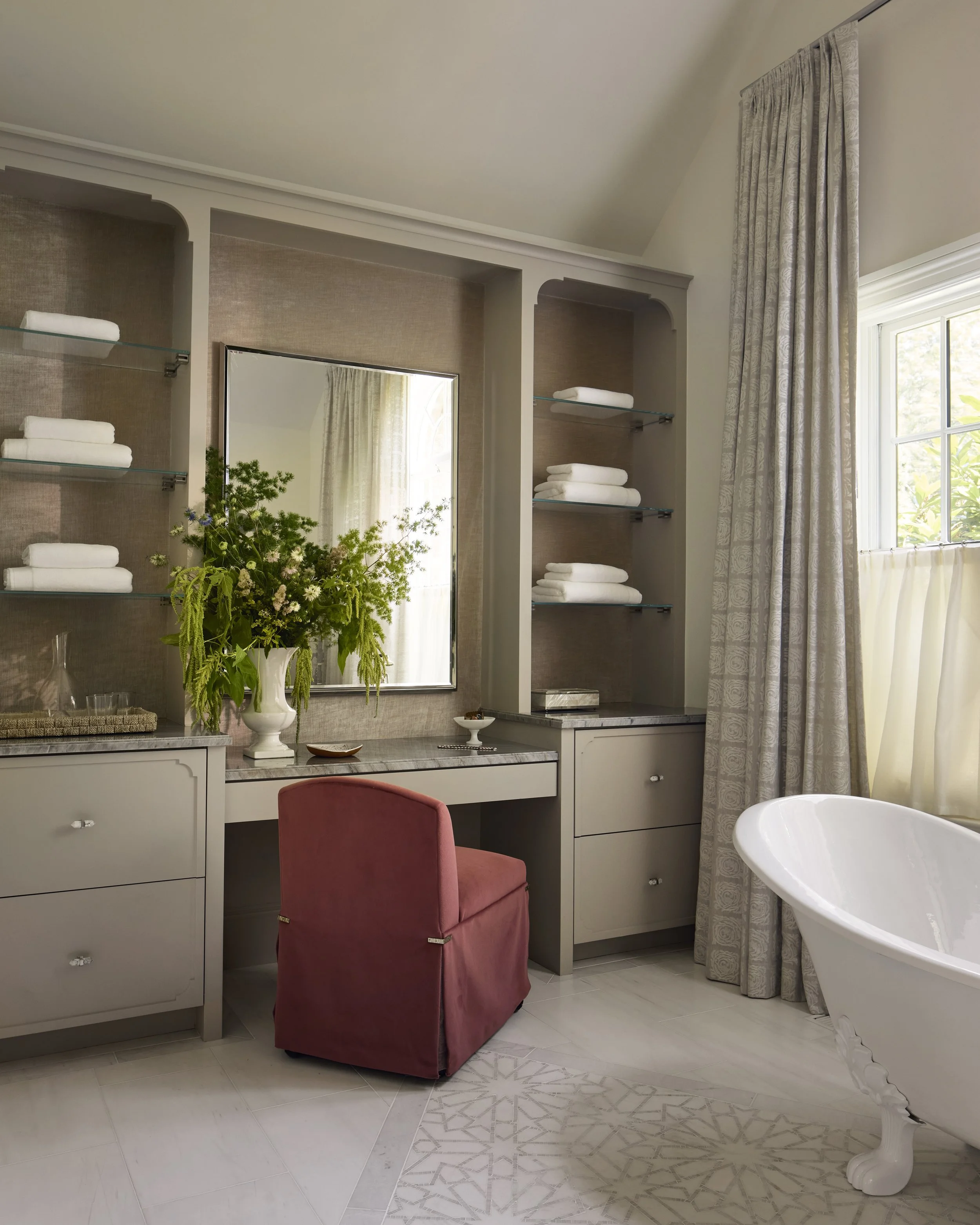
Dining areas can be stocked with pieces from houses such as Christofle and Baccarat. Bedrooms and baths may be outfitted with monogrammed Frette or Sferra linens, luxury toiletries, and custom closet accessories.
Pantries can be organized. Bars can be stocked. Beds can be made. And yes, someone has to decide where the salad servers live. These details may sound small until you arrive at a brand-new house with six bedrooms and realize nobody bought a single towel.
The Hamptons Also Has Its Own Material Rules
Designing near the ocean introduces another entire layer of consideration. Salt air is beautiful when you're walking on the beach. It is slightly less charming when it starts attacking metal finishes.
For coastal Hamptons homes, we think carefully about how materials will perform in humidity, strong sunlight, salt air, and seasonal temperature changes. That can mean specifying marine-grade hardware, UV-resistant fabrics, and moisture-stable woods in areas exposed to the elements.
Outdoor furniture and textiles also need to tolerate far more than the occasional summer shower. And anything sitting in direct sunlight needs to be evaluated for fading. This does not mean sacrificing beauty for durability. It means selecting beautiful things that will still look beautiful after several summers. A fairly important distinction.
The Pool House Needs Its Own Move-In Plan
Hamptons living happens outside. Often, a lot of it.
So when we talk about furnishing a house, we are also talking about furnishing and preparing outdoor kitchens, terraces, dining pavilions, pool houses, cabanas, firepit areas, and sometimes several separate entertaining zones.
These spaces need furniture, of course. But they may also need outdoor dinnerware, glassware, serving pieces, towels, cushions, accessories, heating, lighting, and everything required to entertain comfortably.
We want those spaces completely ready before the first summer weekend. Because the Saturday before Memorial Day is not the ideal moment to discover that the outdoor dining table seats fourteen and you own six plates.
Kitchens, Wine Cellars, and Coffee Are Serious Business
The kitchen is another area where “turnkey” gets very specific. For clients working with a private chef or estate manager, we can coordinate the initial setup of the kitchen, pantry, wine cellar, and coffee bar around the family's preferences and routines.
Temperature-controlled wine cellars may need initial organization and provisioning. Walk-in pantries need to be planned so someone can actually find things. Espresso stations can be set up with the equipment, cups, accessories, and supplies the family prefers.
These are not necessarily glamorous design decisions. But they have a tremendous effect on how the house feels the first morning you wake up there. I would argue that finding your coffee immediately is, in fact, a form of luxury.
Then Someone Has to Teach the House How to Behave
Today's large Hamptons homes are incredibly sophisticated. Lighting. Shades. Climate. Audio. Security. Pool systems. Outdoor lighting. Heating. Sometimes even the fireplaces. Everything talks to something else.
We work with home-automation specialists using systems such as Lutron and Savant to make sure those systems are programmed around the way the family actually lives.
Automated shades can be scheduled. Different HVAC zones can be preset. Lighting scenes can be programmed for dinner, entertaining, evenings, or arrival. Security can be integrated.
And once everything is working, the estate staff should not need a degree in electrical engineering to turn on the pool lights. For larger properties, a digital estate manual can bring together instructions for lighting, AV, HVAC, pool equipment, security, and other systems in one place. A very sophisticated home should still be easy to use.
Getting Everything to the Hamptons
This is where the decidedly less glamorous side of luxury interior design begins: logistics. Anyone who has spent enough time on the East End knows that getting from point A to point B in summer can occasionally become a philosophical exercise. Now imagine coordinating multiple trucks filled with custom furniture, fine art, lighting, antiques, rugs, and accessories, while installers, cleaners, art handlers, and technicians all need to arrive in the right order—and, very often, everything needs to be finished before Memorial Day.
This is why receiving warehouses are such an important part of our full-service furnishing projects. Rather than sending furniture directly to the client's home as it becomes available, pieces are delivered to a professional receiving facility, where they can be inspected, photographed, unpacked, assembled, and stored until installation. Upholstery can be checked and steam-cleaned, damages can be caught and resolved before anything reaches the house, and art or especially delicate pieces can be handled separately.
It also means all of the crates, cardboard, packing materials, and general mess stay at the warehouse instead of arriving at the front door. There are few things less luxurious than finally seeing your beautifully furnished living room surrounded by forty-seven cardboard boxes.
Installation Week Is Carefully Choreographed
By the time installation begins, we want as little improvisation as possible, particularly when there is a hard move-in date. And in the Hamptons, there is very often a hard move-in date. Memorial Day waits for no sofa.
Our white-glove delivery teams bring furnishings from the receiving warehouse to the property in carefully scheduled loads, while our team coordinates the many other pieces happening at the same time. Furniture and rugs are installed, lighting is completed, art is hung, accessories are styled, beds are made, and outdoor areas are fully set. Once everything is in place, the house is deep-cleaned and all packaging and installation debris are removed.
For clients who require an additional level of privacy, deliveries can also be coordinated through discreet, unbranded transport to minimize unnecessary attention around the property.
Ideally, the client never experiences the installation process itself. They experience the result: a completed home.
What “Turnkey” Actually Means
To me, this is the difference between decorating a house and delivering a fully functioning home.
A turnkey Hamptons interior designer has to think beyond what the rooms look like and anticipate what happens when the family actually arrives. Are the beds made and the outdoor showers stocked with towels? Can someone make coffee the next morning? Does the pool house have glasses? Are the shades programmed? Does the estate manager know how to operate the HVAC and pool systems? Is the wine cellar at the right temperature? Are there extra pillows where someone can actually find them?
And, perhaps most importantly, is there a corkscrew?
None of these details is particularly glamorous on its own, but together they determine whether a house feels finished. The goal is for all of the preparation to disappear into the experience of living there.
The Real Luxury Is Being Able to Arrive
For our Hamptons clients, our role often extends well beyond traditional interior design. We are coordinating design, procurement, receiving, installation, builders, specialty vendors, smart-home teams, household staff, and family offices so all of those individual pieces come together as one finished home.
After months—or sometimes years—of designing and building, the handover should not feel like the beginning of another project. The family should be able to arrive, unpack their clothes, turn on the music, walk out to a ready pool, find fresh towels in the cabana and something cold in the refrigerator, and start enjoying the house.
That, to me, is what a truly turnkey Hamptons home should feel like: not simply furnished, but completely ready for life.