Behind Closed Doors: High-Net-Worth Interior Design & Estate Confidentiality
One of the more fascinating parts of designing homes for high-net-worth families has absolutely nothing to do with sofas, stone slabs, or the perfect plaster finish.
It’s security. And I have to admit, I find this world incredibly interesting.
When you’re designing a private residence—or several residences—for a family who moves between New York, the Hamptons, Palm Beach, Europe, or wherever life takes them, privacy becomes part of the design brief in a very real way.
How do you make a house incredibly secure without making it look incredibly secure?
How do you protect a family, their art, jewelry, information, and privacy while still creating a home that feels warm, relaxed, and beautiful?
That’s where it gets really interesting. The best security features are usually the ones you would never know were there.
First, You Need a Very Specialized Team
A large private residence involves far more people than most clients realize.
We’re not only working with architects, builders, and landscape designers. Depending on the property and the client’s needs, the team may also include security architects, acoustic engineers, security strategists, art conservators, specialist fabricators, and master artisans.
And everyone needs to be talking to each other early. If a security consultant tells us the front door needs a three-inch steel core, I would very much like to know that before we design the front door. If there is going to be a safe room hidden behind a marble wall, that is also useful information before the marble is installed.
This is why our role as lead interior designers often extends well beyond selecting what goes into the rooms. We are coordinating all of these specialists and making sure the technical requirements become part of the architecture instead of something awkwardly added afterward.
On many projects, we also work directly with the people around the client: family office directors, estate managers, attorneys, and private security teams. The goal is simple. The client should not need to spend their day figuring out which engineer needs which drawing or who needs access to the property on Tuesday. We do.
Privacy Starts Before You Even Get to the House
The first layer of security can actually begin at the property line.
On larger estates, we work with landscape architects and security strategists to create layers of privacy that keep the house from feeling exposed without making the property look like a compound. This can be surprisingly beautiful.
Mature trees and dense planting can screen the house from the road and protect it from long-range lenses. Six-foot perimeter fencing can be integrated into the landscape so you barely notice it. Changes in grade can make it much more difficult for someone—or a vehicle—to cross certain parts of the property.
And yes, even the plants can be part of the security plan. Dense, spiked vegetation can create a very effective natural deterrent. Suddenly that beautiful hedge has a second job.
Then there are invisible perimeter laser systems, which can be placed around key entry points and connected directly to the home’s security hub. If someone crosses into a protected area, the security team or homeowner is alerted. Very James Bond. Except ideally you would never know it was there.

An 800-Pound Front Door Can Still Be Beautiful
This may be one of my favorite examples of what happens when security and design work together. A high-security custom front door can weigh more than 800 pounds and contain more than three inches of solid steel inside it. Eight hundred pounds!
The door can then be anchored into a reinforced concrete frame connected directly into the home’s structural foundation. And after all of that engineering, we can make it look like a beautiful custom wood, bronze, or paneled door.
That is the part I love. The technology can go even further. Fingerprint scanners and facial-recognition sensors can be incorporated directly into custom architectural metalwork and door hardware so there isn’t some clunky piece of equipment sitting next to your beautiful entry.
You see a gorgeous front door. Meanwhile, there is quite a bit happening behind the scenes.
Even the Windows May Not Be What They Seem
Glass is another area where security technology has become incredibly sophisticated. Instead of standard residential windows, a high-security home may use triple-layered, one-inch-thick laminated glass.
Large patio doors and sliding glass walls can even be engineered with higher levels of bullet resistance. And then there is smart glass, which I personally think is one of those technologies that feels slightly magical the first time you see it.
At the press of a button, the glass changes from completely clear to opaque. So you can have a bathroom or bedroom surrounded by beautiful glass and natural light—and then instantly create total privacy when you want it. No curtains being drawn. No blinds coming down. Click. Private.
And Yes, There Are Casino-Grade Cameras
Some residences are monitored with sophisticated commercial surveillance systems comparable to what you might find in casinos. These systems can include facial-recognition technology and an extensive network of cameras covering the property. Which presents an obvious interior-design problem: No one wants to look at twenty security cameras in their beautifully detailed house. So we hide them.
Cameras can be integrated into custom soffits, recessed into ceilings, or coordinated with architectural lighting channels so they virtually disappear. That is really the recurring theme with all of this. The security can be extremely serious. The house should not feel serious.
Safe Rooms Are Nothing Like What You Think
When most people hear “panic room,” I think they imagine a little concrete bunker with a steel door and a folding chair. Modern safe rooms can be something entirely different.
As features in Mansion Global on luxury panic rooms and Robb Report on hidden security architecture have shown, safe rooms are increasingly being designed as fully integrated parts of high-end residences.
Working with specialized defense and security consultants, these rooms can be engineered to military standards and include their own air filtration, dedicated communication systems, and independent power.
And the entrance? Completely hidden. It might sit behind custom millwork. Or a library door. Or a book-matched marble panel that looks exactly like the rest of the wall. This is where interior design gets to have a little fun. Because if you are going to have a secret room, I personally feel it should have a very good secret door.
Jewelry Safes Have Also Become Extremely Beautiful
Security for jewelry and watch collections is another world entirely.
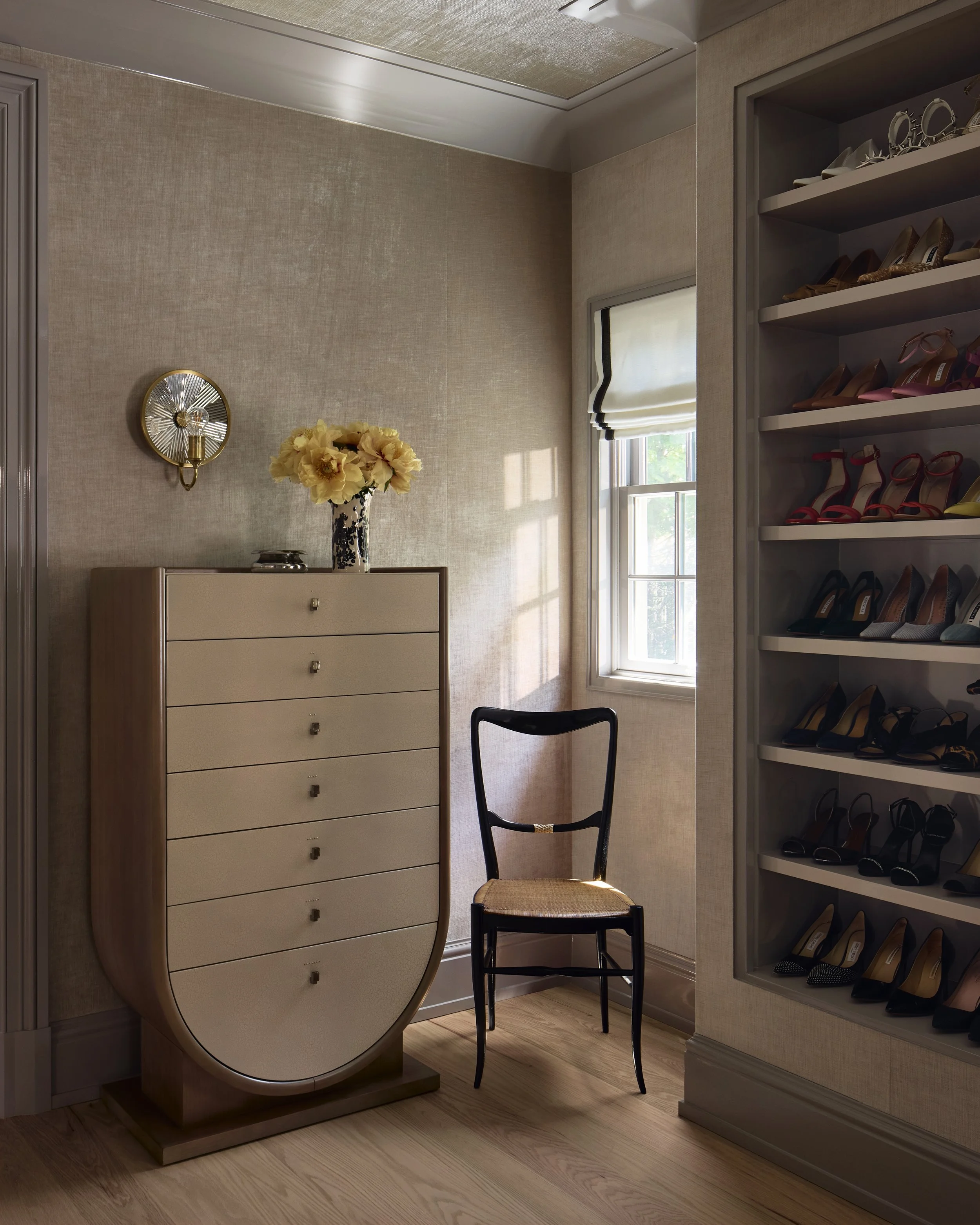
Companies such as Stockinger, Buben & Zörweg, and Brown Safe make custom safes and vault systems that can be built directly into dressing-room cabinetry.
These are not the gray metal boxes most of us picture when we hear the word “safe.” They can include biometric access, integrated watch winders, custom jewelry drawers, fine Italian leather interiors, and high-tensile steel construction.
We can then design the surrounding cabinetry so the entire system feels like part of the dressing room. I love this because it takes something purely functional and turns it into an actual design feature. If the safe has to be there, why shouldn't it be beautiful?
Then There Is the Privacy of the Project Itself
This part is less glamorous, but arguably even more important.
A major private residence can involve an enormous number of people over several years: architects, contractors, subcontractors, fabricators, installers, artisans, delivery teams, photographers, vendors—the list goes on.
And every person who steps onto that property potentially knows something about the house.For clients who require a high level of discretion, we establish clear confidentiality protocols from the beginning.
That can include comprehensive Non-Disclosure Agreements (NDAs) for vendors, tradespeople, and artisans, as well as strict rules around photography, social media, drawings, and digital information.
As The Wall Street Journal has reported in its coverage of UHNW real estate, anonymity and layered privacy controls can be among the most important requirements for these homeowners.
And it makes sense. If you are building a private home, you probably don't want someone posting the custom wine cellar to Instagram before you've even moved in.
Even Furniture Deliveries Can Be Discreet
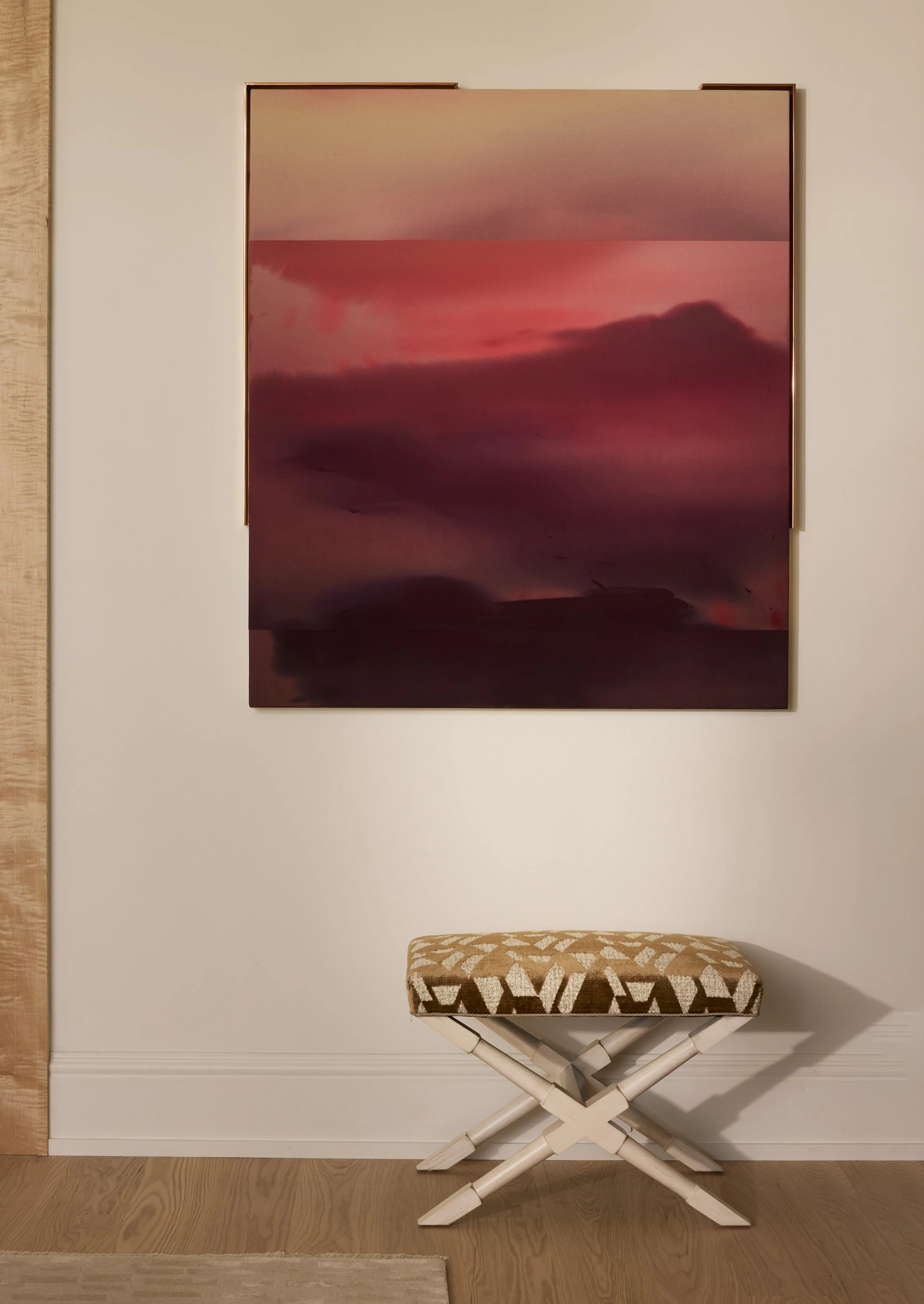
This is one of those behind-the-scenes things clients rarely think about until they go through a major furnishing project. Imagine ordering furniture, antiques, art, lighting, custom pieces, stone, and decorative objects from dozens—or hundreds—of vendors. You do not want all of those trucks pulling up to your house individually.
Instead, custom furniture, rare materials, and artwork can be delivered to private off-site receiving facilities where everything is received, inspected, documented, and pre-assembled before it ever reaches the client’s home.
Then, when the house is ready, the pieces arrive together for a coordinated white-glove installation. For especially private projects, deliveries can even arrive in discreet, unbranded vehicles. Your neighbors do not need to know that a very important eighteenth-century chair just arrived.
There Are Even Ways to Protect Conversations
This is where things start feeling particularly futuristic. Private suites and offices can incorporate radio-frequency attenuation glass and concealed acoustic dampening to protect conversations from laser eavesdropping and reduce digital signal leakage.
Yes, laser eavesdropping is apparently something one needs to think about at a certain level. These systems can be built directly into walls, windows, and architectural assemblies so there is no visual indication that the room is any different from the one next door.
Again, very serious technology. Completely invisible design.
Art Collections Need Their Own Security Infrastructure
If a home contains museum-quality art or important collections, protecting the objects becomes another layer of the design. And it is not just about alarms.
Museum-grade collections may require very specific environmental conditions to control temperature and humidity. That can mean dual-compressor HVAC microclimate systems concealed within custom joinery.
Fire protection can also require specialized systems. Instead of conventional sprinklers—which obviously introduce another problem when you have highly valuable art—certain collections may use non-water fire suppression systems, such as Novec gas systems. All of this needs to be coordinated very early in the design process. Because once you have finished the beautiful paneled wall, it is not an ideal moment to discover that the Picasso needs its own microclimate.
And Finally: How Does Everyone Move Through the House?
This is something I think about constantly in large residences. A high-touch estate may have family members, housekeepers, chefs, estate managers, maintenance teams, private security, caterers, and deliveries all moving through the property at the same time.
Ideally, the family sees very little of that choreography. So we map dual circulation paths. There may be hidden service corridors, discreet delivery bays, secondary entrances, and separate routes allowing domestic staff and security teams to move through the property without constantly crossing the primary family spaces.
It is one of those design features that you may never consciously notice. You just notice that the house seems to run beautifully. And that is really the point.
The Ultimate Luxury Is Not Having to Think About Any of This
Our role on these projects is to sit at the center of a very complicated web of specialists:
Security consultants.
Structural engineers.
Architects.
Landscape architects.
Art experts.
Family offices.
Estate managers.
Craftspeople.
Builders.
We make sure everyone is talking to each other, the technical requirements are resolved, and none of it gets in the way of creating a beautiful home.
Because our clients should not have to think about an 800-pound steel door, whether the security camera conflicts with the lighting plan, or how the jewelry vault gets installed inside the dressing-room cabinetry.
They should just come home.
For me, that is one of the most interesting parts of high-net-worth interior design and luxury estate design: there can be an extraordinary amount of technology, security, planning, and operational complexity hiding behind what ultimately feels like a warm, comfortable, effortless home. The best luxury is often everything you don't see.