Why Italian Mid-Century Design Still Feels So Modern
There’s a reason Italian mid-century furniture continues to appear in some of the most considered interiors today. It isn’t simply because the pieces are beautiful—or because names like Paolo Buffa, Osvaldo Borsani and Marco Zanuso have become increasingly collectible.
What makes Italian design from this period so enduring is the thinking behind it.
From the 1930s through the 1960s, Italian designers were navigating an extraordinary period of change. Traditional craftsmanship existed alongside rapidly developing industrial production. Classical ideas about proportion and beauty were being reconsidered for modern life. New technologies and materials were suddenly giving designers possibilities that hadn't existed before.
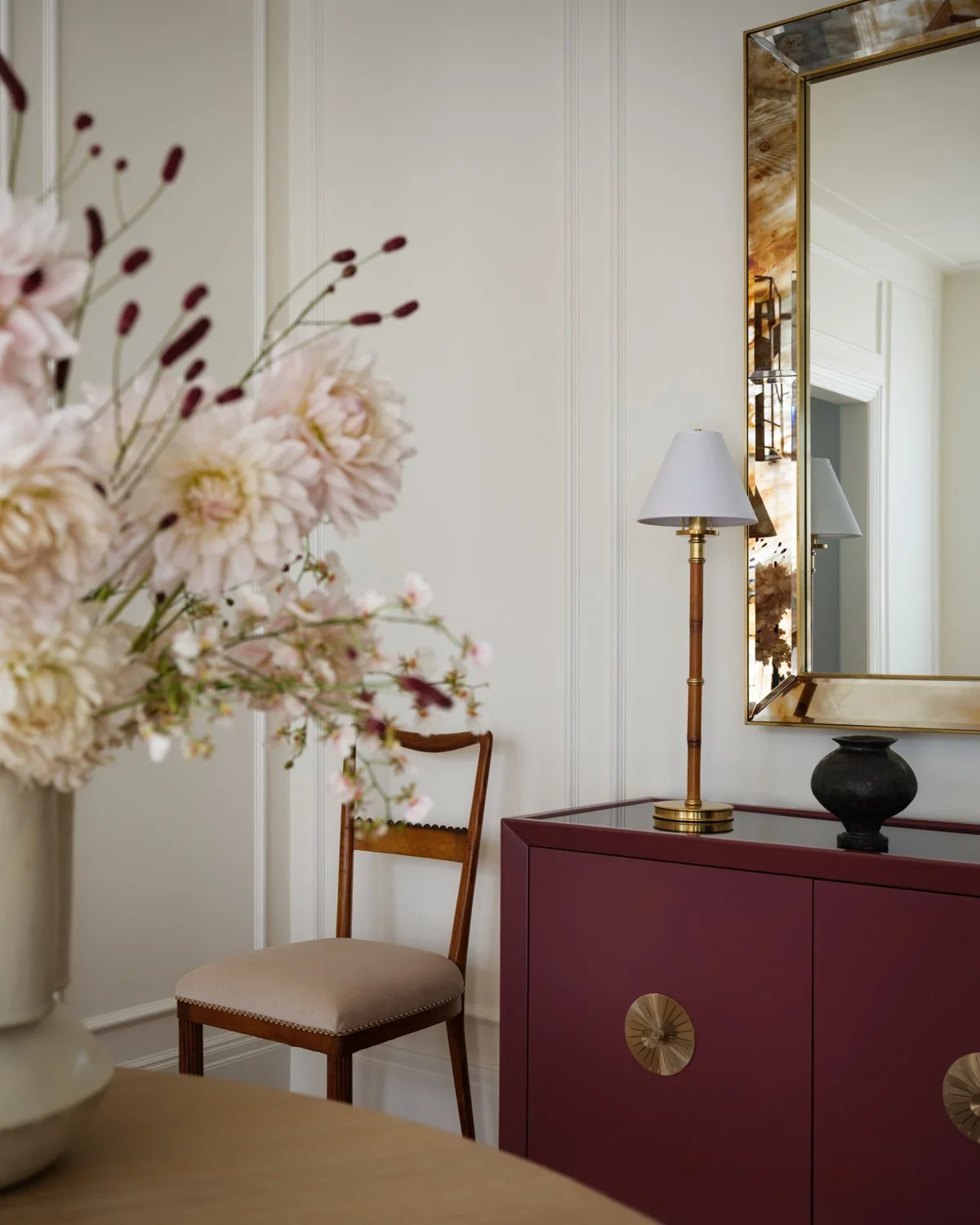
Italian mid-century design as seen in our Amsterdam Project where we sourced a vintage chair of the dining room.
The result wasn't a single “Italian style.” In fact, the work of Buffa, Borsani and Zanuso can look remarkably different.
What connects them is a mindset: respect for craft, curiosity about materials, rigorous attention to proportion and a willingness to rethink how furniture should work.
That combination is a large part of why their work still feels so relevant today.
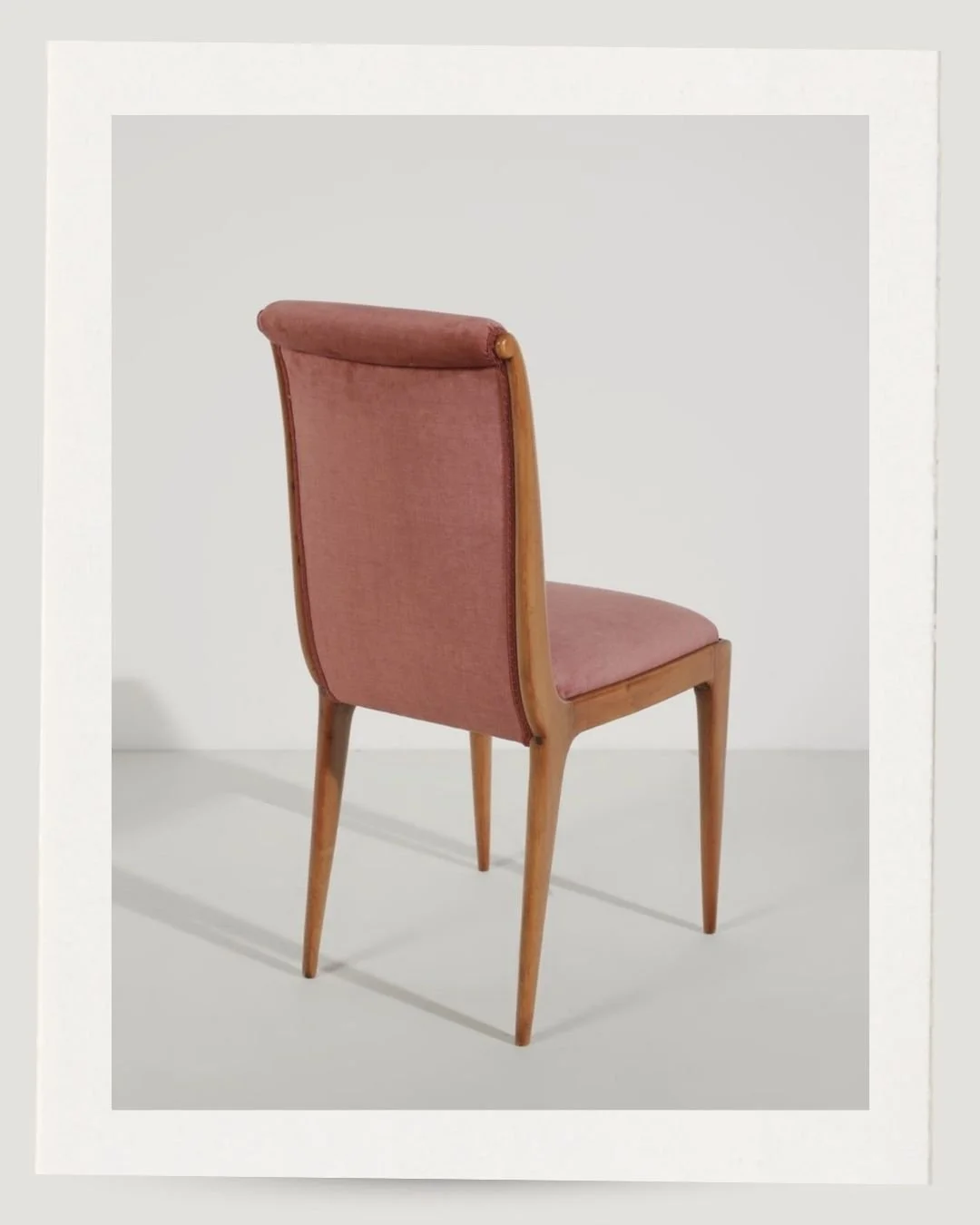
Italian mid-century chair, circa 1940s.
What Defines Italian Mid-Century Design?
Unlike some design movements that can be identified by a particular silhouette or aesthetic, Italian modernism was remarkably varied.
Its designers moved fluidly between architecture, interiors, furniture, engineering and industrial design. They were interested not only in how an object looked, but in how it was made, how it functioned and how it related to the room—and the person—around it.
Three designers illustrate that evolution particularly well.
Paolo Buffa: Modernizing Tradition
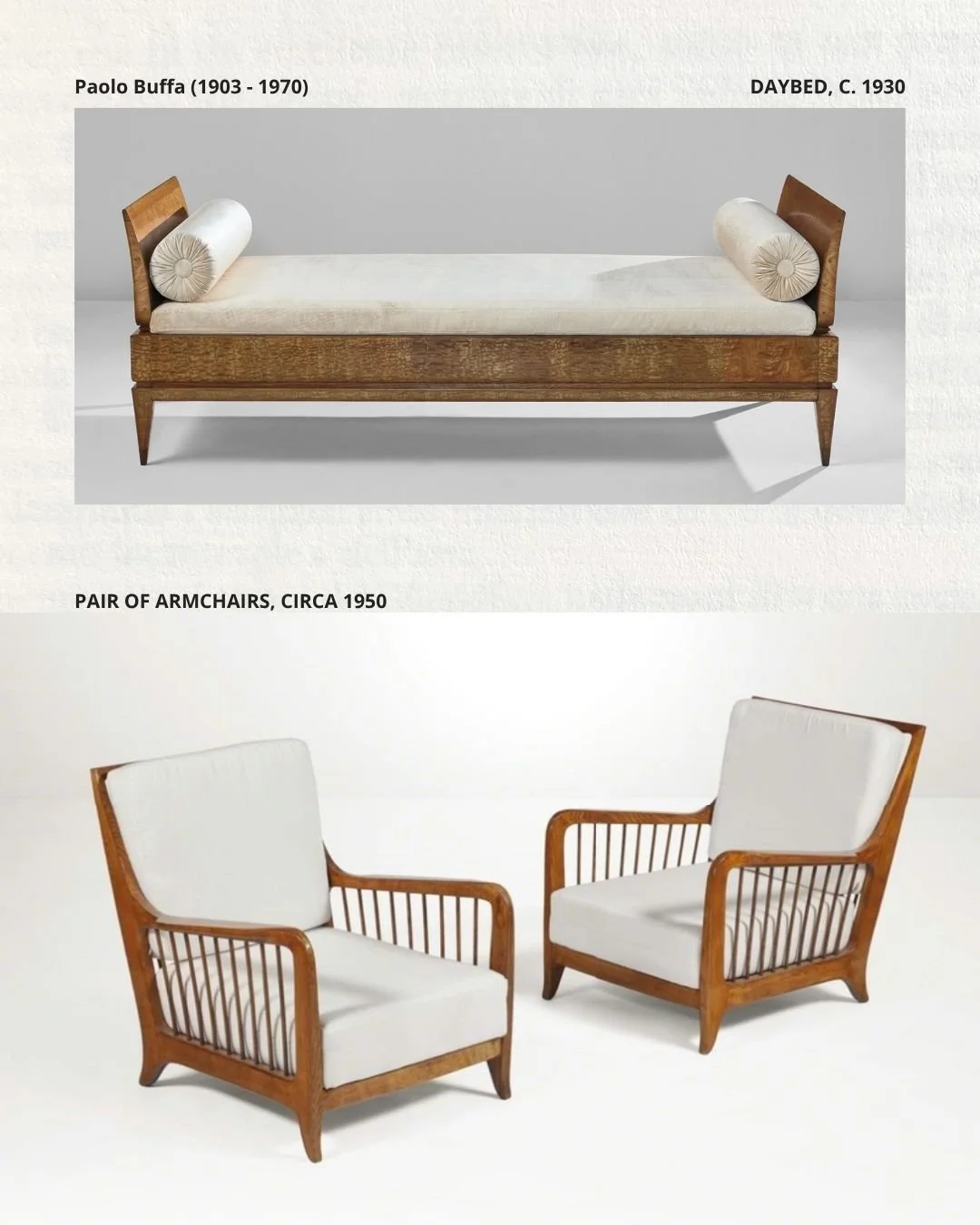
Paolo Buffa occupies an interesting position in Italian design history because his work bridges two worlds.
Born in Milan in 1903, Buffa studied architecture at the Politecnico di Milano and spent time in the studio of Gio Ponti and Emilio Lancia before establishing his own practice. By the 1930s, he was designing interiors and furniture for Milan's upper classes, often working with highly skilled cabinetmakers and specialized craftsmen.
And that craftsmanship matters when looking at his work.
Buffa didn't abandon the traditions of fine Italian furniture making in pursuit of modernism. He refined them.
Classical proportions became lighter. Decorative details became more restrained. Legs tapered, silhouettes became cleaner, and beautifully worked woods and subtle metal details gave the furniture richness without making it feel heavy.
That tension is what I find so compelling about Buffa. His furniture can feel unmistakably of its time and yet remarkably easy to place in a contemporary room.
It is also a useful reminder that modern design doesn't necessarily require rejecting the past. Sometimes the more interesting approach is knowing what to keep—and what to remove.
Osvaldo Borsani: Designing Furniture That Could Move With Modern Life
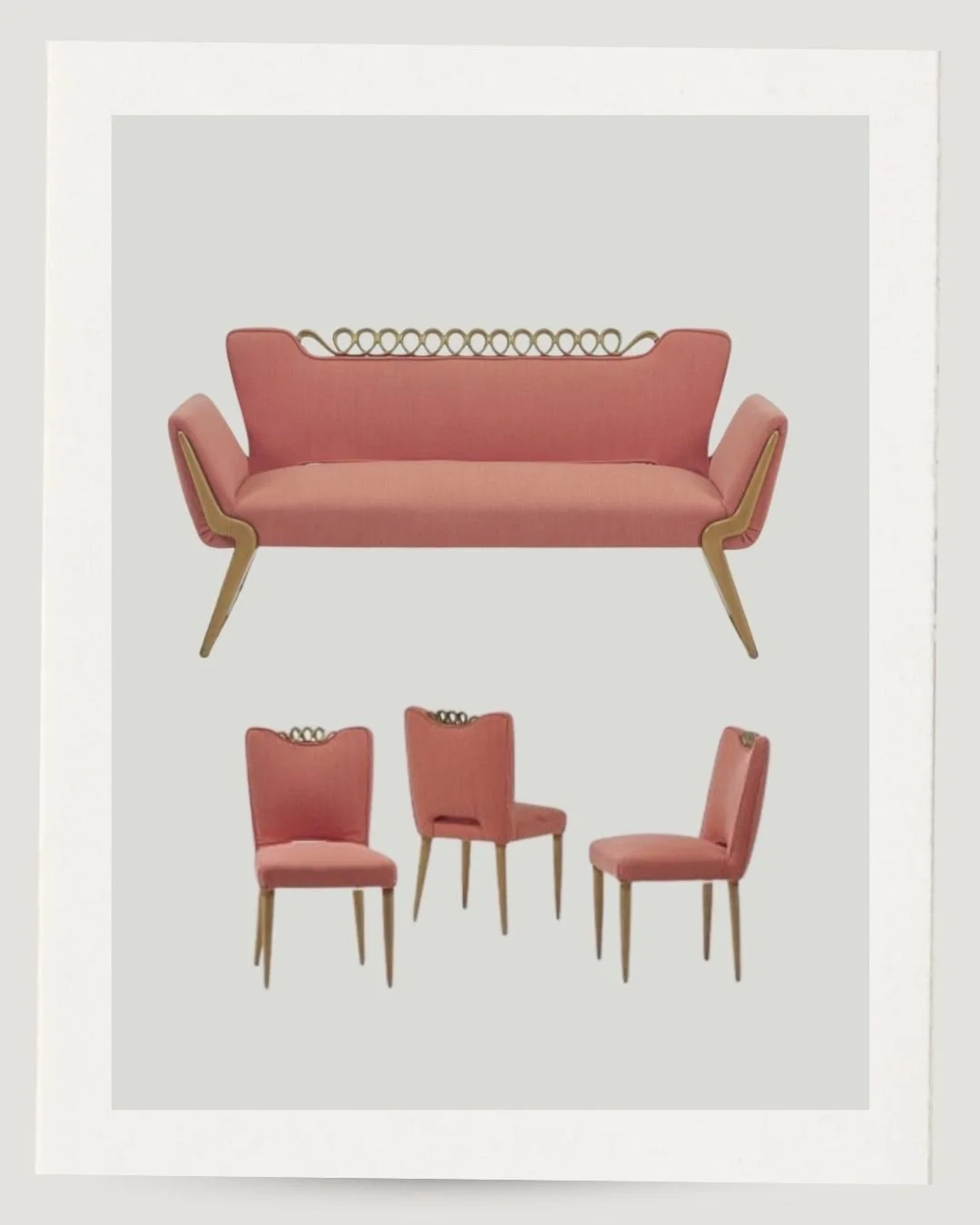
Osvaldo Borsani, circa 1940s
If Buffa represents the refinement of tradition, Osvaldo Borsani shows us Italian design moving decisively toward technology and industrial production.
Borsani grew up around furniture making and trained as an architect at the Politecnico di Milano. In 1953, he and his brother Fulgenzio founded Tecno with the goal of bringing sophisticated design into standardized production.
One of the clearest expressions of that thinking is the P40 lounge chair, designed in the 1950s.
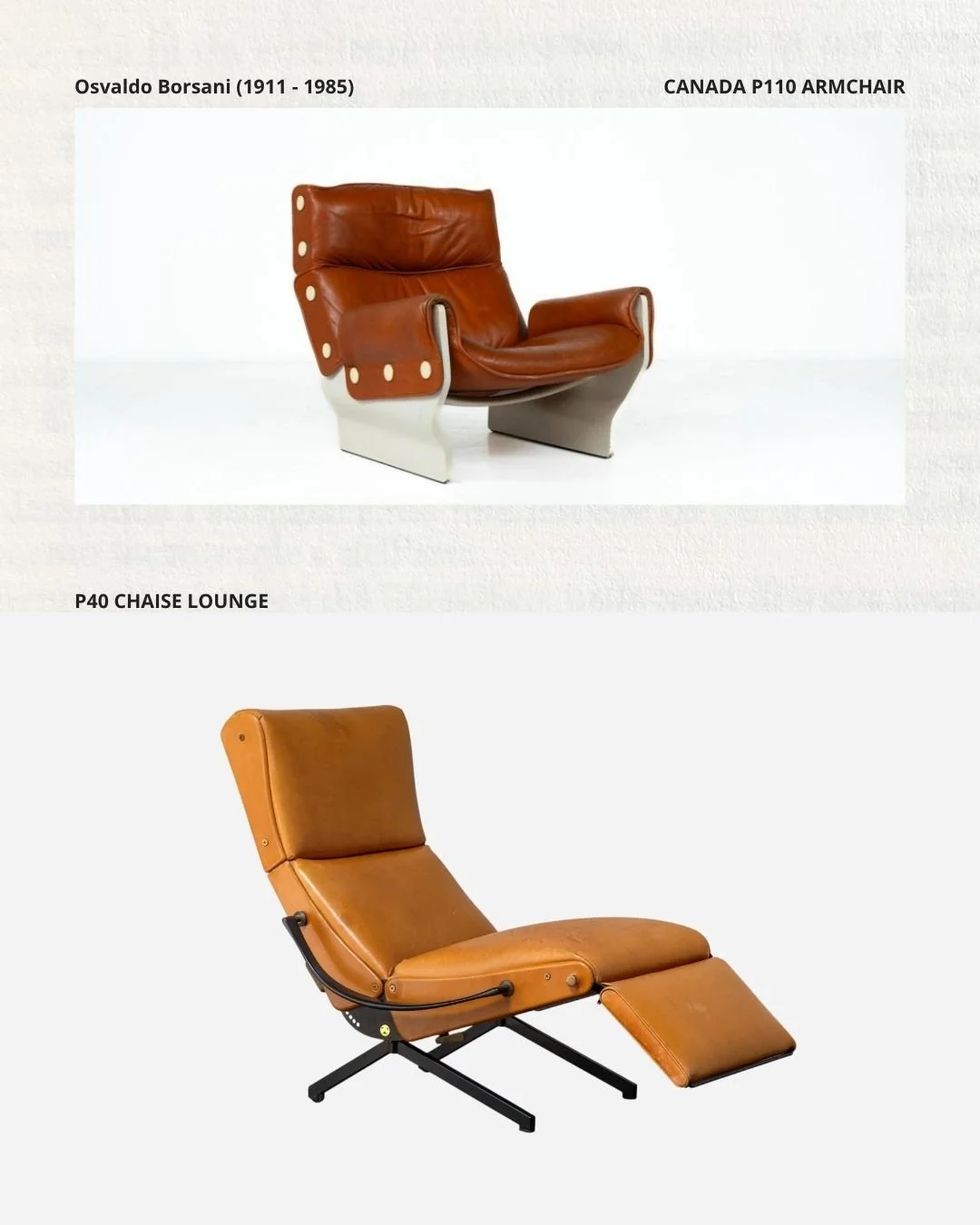
Rather than treating a lounge chair as a fixed object, Borsani made it adjustable. Its seat and back pivot, the leg rest and footrest retract, the headrest extends and the armrests flex. The chair could change according to the way someone wanted to sit.
That may sound perfectly normal now. In the context of the 1950s, it represented a fundamentally different way of thinking about furniture.
The mechanism wasn't hidden from the design—it was part of the design.
And that is what makes Borsani's work so interesting to me. Beauty and engineering aren't treated as competing ideas.
The engineering creates the beauty.
The P40 ultimately became one of Tecno's defining designs, but more broadly it captures something essential about postwar Italian modernism: furniture was being reconsidered for a new, more dynamic way of living.
Marco Zanuso: What Happens When You Rethink the Material?
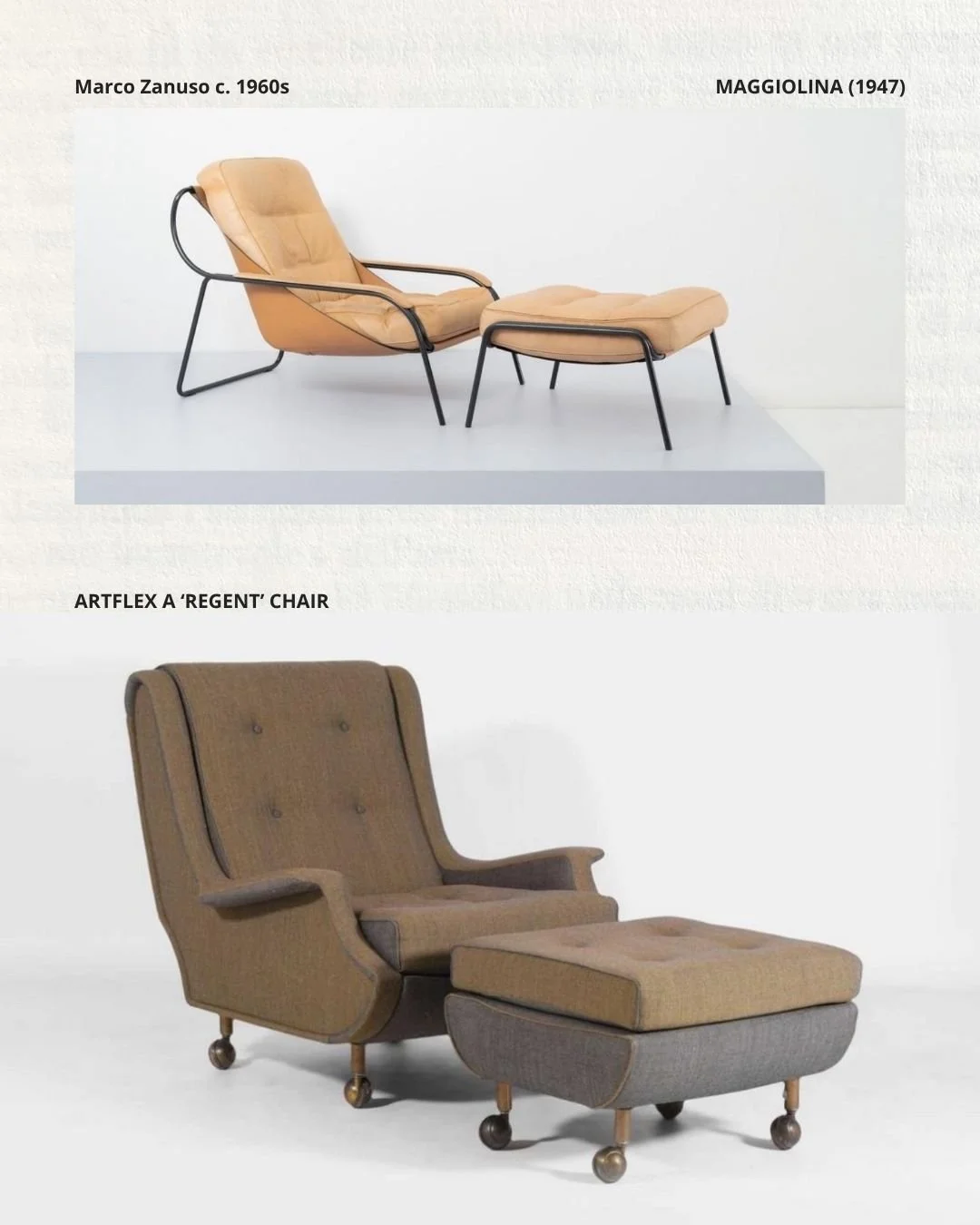
Chairs by Marco Zanuso, circa 1960s.
Marco Zanuso pushed that experimentation even further.
An architect, designer and editor, Zanuso became one of the important figures in Italy's postwar design culture. His work explored how new materials and manufacturing processes could fundamentally change familiar objects.
The 1951 Lady Chair, designed for Arflex, is a perfect example.
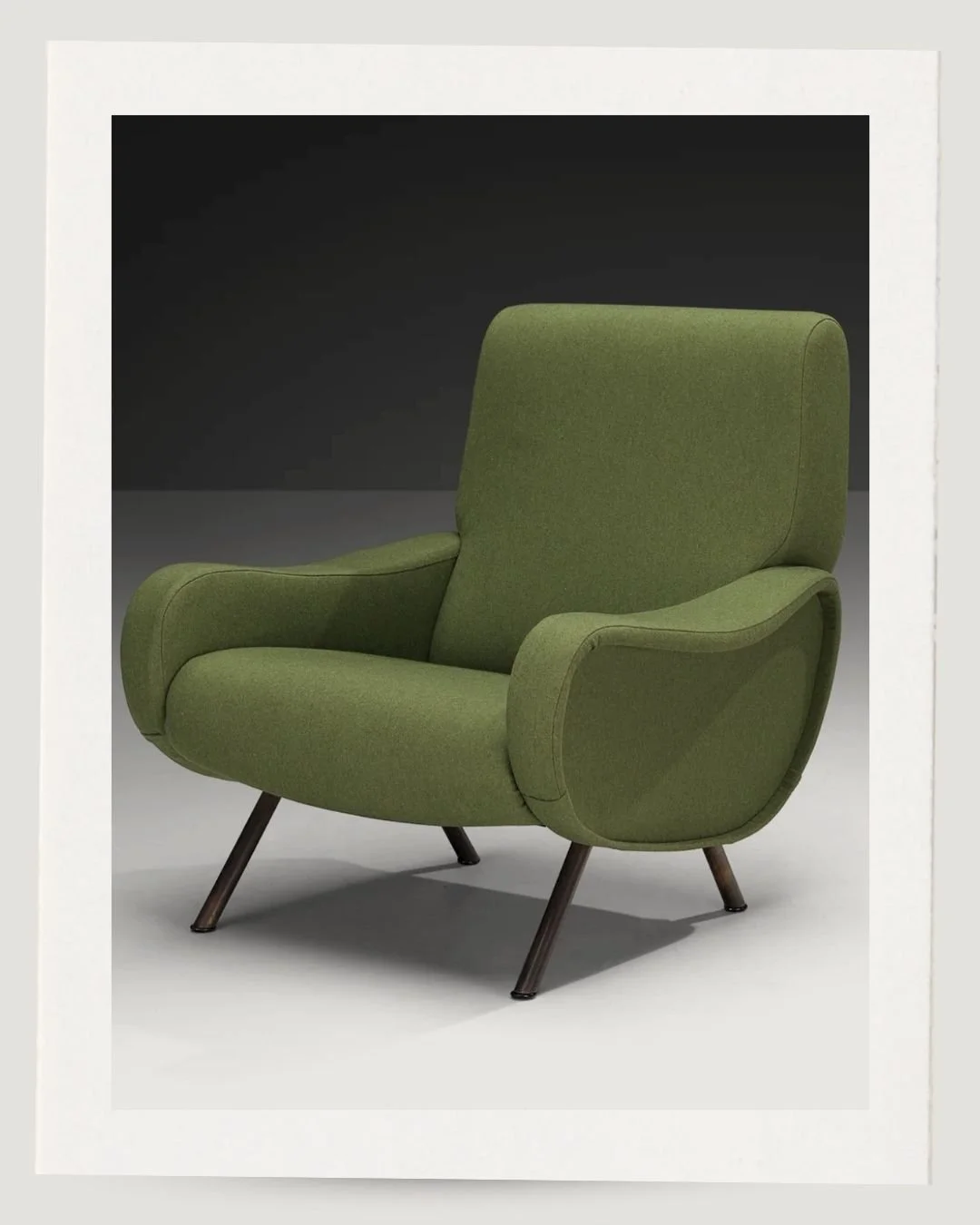
"Lady" Armchair, Marco Zanuso, Manufacturer Arflex, 1951. Zanuso pioneered the use of Pirelli's novel foam rubber and elastic products, seamlessly integrating soft curves and lightness.
At the time, foam rubber and elastic webbing were relatively new possibilities in furniture production. Rather than simply applying these materials to a conventional chair, Zanuso used them to reconsider the chair's construction and comfort.
The result was the Lady Chair: soft and sculptural, but also technologically innovative.
It received a Gold Medal at the IX Milan Triennale in 1951 and is now represented in major museum collections, including The Metropolitan Museum of Art and The Museum of Modern Art in New York.
What I love about the Lady Chair is that none of this innovation makes it feel technical. It simply feels comfortable, generous and beautifully resolved. That may be one of the great lessons of Italian design: innovation doesn't have to announce itself.
Why Is Italian Mid-Century Furniture So Collectible Today?
Part of the appeal is certainly rarity, provenance and craftsmanship. But I think there is another reason these pieces continue to resonate.
The best Italian mid-century furniture wasn't designed around a look. It was designed around an idea.
Buffa was asking how tradition could become modern. Borsani was asking how furniture could adapt to the person using it. Zanuso was asking how new materials could change the way furniture was constructed and experienced. Those are still relevant questions.
It's why these pieces can sit surprisingly comfortably in homes designed many decades later. A Buffa cabinet doesn't require an entirely 1930s interior around it. A Borsani chair doesn't need a room full of mid-century furniture. The Lady Chair doesn't need to be treated like a museum object. In fact, I generally find the opposite more interesting.
How We Use Collectible Italian Design in Contemporary Interiors
For me, the goal isn't to create a “mid-century room.” It is to find the piece that adds something the room otherwise wouldn't have: an unusual silhouette, exceptional craftsmanship, a sense of history, or simply a moment of surprise.
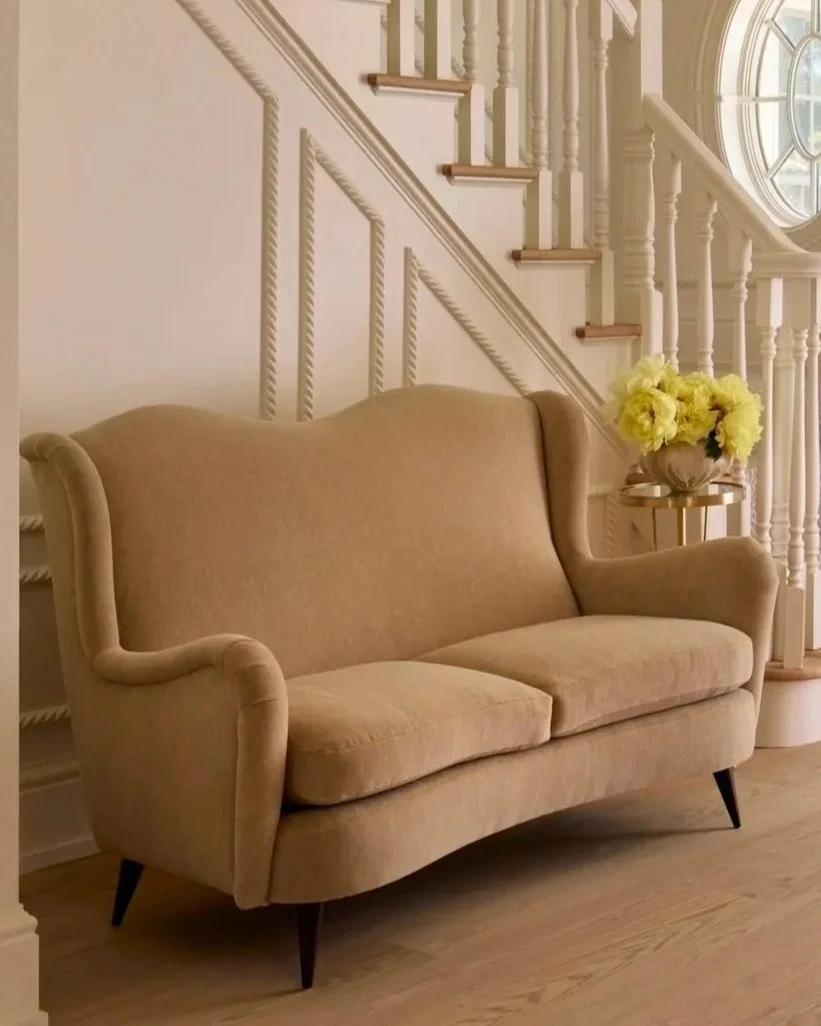
An Italian mid-century settee in our Watermill Project.
A single important vintage piece can often do more for a room than an entire suite of matching furniture. It creates tension between old and new and gives an interior the feeling that it has been assembled over time rather than purchased all at once.
This is particularly true with Italian design because there is so much range within it. Buffa's refined cabinetmaking, Borsani's mechanical experimentation and Zanuso's sculptural upholstery don't speak exactly the same language—and that's precisely the point.
Collecting good design isn't about adhering to one period. It's about recognizing ideas and objects that still have something to say.
What Should You Look for When Collecting Italian Mid-Century Design?
Start with the designer, but don't stop there.
With vintage furniture, attribution, manufacturer, date, provenance, condition and restoration history can all matter. Some designers worked with multiple workshops or manufacturers, and not every piece is signed or labeled. Buffa's work, for example, can be particularly nuanced to authenticate because pieces were often produced through specialist workshops.
For an interior, I would add another criterion that is less frequently discussed:
Would you still want the piece if no one knew who designed it?
The best collectible furniture should work on both levels. It can have historical and cultural importance, but it should also earn its place in the room through proportion, material, function and beauty. That, ultimately, is why I keep coming back to Italian design.
The Lasting Lesson of Italian Design
Buffa, Borsani and Zanuso took very different paths toward modernity.
Paolo Buffa refined the traditions of Italian cabinetmaking for a changing world.
Osvaldo Borsani brought architecture, engineering and industrial production together.
Marco Zanuso used new materials and manufacturing techniques to rethink familiar forms.
But all three approached furniture as something more than decoration. They considered how it was made. How it functioned. How it related to the body. How it would live within an interior. Nearly a century after Buffa began designing furniture, that still feels like a remarkably contemporary way to think about design. And perhaps that's the real reason the best Italian design never seems to go out of style.
Frequently Asked Questions
What is Italian mid-century design?
Italian mid-century design generally refers to the furniture, lighting and objects produced during Italy's extraordinary period of modern design development around the middle of the 20th century. It encompasses a wide range of approaches, from highly crafted furniture rooted in Italian decorative traditions to experimental industrial designs using new materials and manufacturing technologies.
Who are some important Italian mid-century furniture designers?
Paolo Buffa, Osvaldo Borsani and Marco Zanuso are three important figures, but the period includes many others, among them Gio Ponti, Franco Albini, Ico Parisi, Carlo Mollino, BBPR and the Castiglioni brothers.
Why is Italian mid-century furniture still popular?
Beyond its historical importance, much of the best Italian furniture from this period combines strong proportions, craftsmanship, material experimentation and functional innovation. Those qualities allow individual pieces to work particularly well alongside contemporary furniture.
Can you mix Italian mid-century furniture with contemporary design?
Absolutely. In fact, we often prefer using an important vintage piece as a counterpoint rather than designing an entire room around one period. The contrast can make both the vintage and contemporary pieces feel more distinctive.